Brief Historical Overview of the Akkadian civilisation

Overview of the Akkadian Civilisation
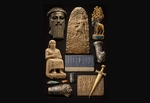
The Akkadian Civilisation
Temporal Extent
c. 2334–2154 BCE
Geographical Locale
Central Mesopotamia (modern-day Iraq)
👑 Founder
Sargon of Akkad
Akkad's Historical Context
The ensuing is a simplified chronological enumeration of early Mesopotamian civilisations:
- Sumerian civilisation (c. 4500–2334 BCE)
- Akkadian Empire (c. 2334–2154 BCE)
- Neo-Sumerian (Ur III) resurgence (c. 2112–2004 BCE)
- Old Babylonian period
- Subsequent Assyrian & Babylonian empires
- Achaemenid Empire
Akkad's Post-Sumerian Status
- The Akkadians emerged following the early Sumerian city-states.
- However, they did not supplant Sumerian culture.
- Instead, they assimilated and amalgamated with it.
Indeed:
- The Sumerians conceived cuneiform writing.
- The Akkadians adopted it, translating it into the Akkadian (Semitic) language.
- Religion, myths, deities — largely derived from Sumer.
Ergo, culturally, Akkad was predicated upon Sumerian foundations.
Ethnic & Linguistic Transition
This is of paramount importance:
- Sumerians → spoke a language isolate (non-Semitic)
- Akkadians → spoke a Semitic language
From Akkadian subsequently developed:
- Babylonian
- Assyrian
Thus, linguistically, Akkad is the progenitor of Babylonian and Assyrian civilisation.
Akkad's Revolutionary Significance
The Akkadian Empire represented:
- The first veritable territorial empire in history
- The initial unification of northern and southern Mesopotamia
- A paradigm for later empires (Babylonian, Assyrian, Persian)
Prior to Akkad:
Independent city-states (Ur, Uruk, Lagash)
Subsequent to Akkad:
The notion of a centralised imperial state
Was It a Precursor to the Persians?
The Achaemenid Empire arose ~1,800 years later.
Imperial administration models: Royal ideology, Provincial governance structures, …all trace back through Mesopotamian traditions that commenced with Akkad. Hence, Akkad → Babylon/Assyria → Persian adaptation
Concise Timeline Overview
Sumer (city-states) Akkadian Empire (first empire) Neo-Sumerian resurgence Babylonian & Assyrian kingdoms Persian Empire
Summary:
- Emerged after the Sumerians
- Was a direct antecedent to the Babylonians and Assyrians
- Influenced subsequent Persian imperial systems
- Marked the genesis of empire as a political structure
Akkadian Kingdom: A Historiographical Exposition

Proto-State Antecedents (Pre-Akkadian Context)
Chronological Scope: Circa 3000–2350 BCE
Political Organisation: Rival Sumerian City-States
Prior to the ascendance of Akkad, the southern reaches of Mesopotamia were predominated by:
- The Sumerian civilisation
- Principal Centres: Uruk, Ur, Lagash, Kish
- Political Paradigm: Independent City-States
- The institution of Kingship existed, yet territorial jurisdiction remained circumscribed.
Proto-Imperial Conditions
Historians have identified several structural preconditions, thus:
- An escalation in inter-city warfare
- The professionalisation of standing armies
- The expansion of long-distance trade networks (Anatolia, the Levant, Persia)
- Administrative literacy (cuneiform bureaucracy)
The city of Kish appears to have been particularly instrumental in bridging the Sumerian and Akkadian spheres of influence.
The Foundation of the Akkadian State
Founder: Sargon of Akkad
Reign: Circa 2334–2279 BCE
Foundational Characteristics
- Overthrew Lugal-zage-si of Uruk
- Established a new capital: Akkad (Agade) — its archaeological location remains unconfirmed
- Unified Sumer and northern Mesopotamia
- Extended dominion to: The Levant (possibly as far as the Mediterranean); Anatolia (via trading posts); Elam (western Persia)
Historiographical Note
Much of Sargon’s biography is preserved in later legendary texts (Neo-Assyrian copies).
Modern historians draw a distinction between:
- Contemporary inscriptions
- Subsequent ideological royal narratives
The Monarchs of the Akkadian Empire
Sargon of Akkad
- Founder
- Instituted a centralised imperial administration
- Appointed Akkadian governors in Sumerian cities
Rimush (Circa 2279–2270 BCE)
- Suppressed widespread revolts in Sumer
- Reasserted imperial authority
Manishtushu (Circa 2270–2255 BCE)
- Expanded trade relations
- Documented land acquisitions (significant for legal history)
Naram-Sin of Akkad (Circa 2254–2218 BCE)
- The zenith of Akkadian power
- The first Mesopotamian ruler to assert divinity during his lifetime
- Title: “King of the Four Quarters”
- Celebrated Victory Stele
Shar-kali-sharri (Circa 2217–2193 BCE)
- Confronted internal instability
- Faced increased external pressures
The Phase of Prosperity
Characteristics of Prosperity (Circa 2250 BCE Peak)
Political
- The first territorial empire in recorded history
- Standardised imperial administration
- Provincial governors accountable to the central authority
Economic
- Trade relations with: Magan (Oman); Dilmun (Bahrain); Anatolia.
- Centralised redistribution economy
- Agricultural intensification (irrigation systems)
Cultural
- The Akkadian language became the administrative lingua franca
- Sumerian religious continuity was maintained
- Royal propaganda elevated the ideology of kingship
The Decline of the Akkadian Empire
Chronological Scope: Circa 2200–2154 BCE
Historiography posits multiple contributory factors:
Internal Revolts: Southern cities repeatedly mounted rebellions.
External Invasions: Traditionally attributed to the Gutians, a tribal people from the Zagros Mountains.
Climatic Hypothesis: Contemporary research associates the collapse with the 4.2 kiloyear aridification event:
- Severe drought
- Agricultural collapse in northern Mesopotamia
- Abandonment of settlements
Overextension: The classic theory of imperial overstretch; the preponderance of scholarly opinion now favours a multi-causal model.
The Post-Akkadian Political Landscape
The Gutian Interregnum (Circa 2154–2112 BCE)
- Fragmented authority
- Weak central control
- Limited monumental construction
The Neo-Sumerian (Ur III) Revival
The Third Dynasty of Ur
Founder: Ur-Nammu
- Restoration of centralised rule
- Administrative sophistication surpassing that of Akkad
- A Sumerian cultural renaissance
Long-Term Territorial Successors
Upon the former Akkadian territories emerged:
- Old Babylonian states (including the dynasty of Hammurabi)
- Assyrian kingdoms
- The subsequent Neo-Assyrian Empire
- Eventually, Achaemenid Persian control
Historiographical Debates
- Was Akkad truly the “first empire,” or merely an expanded hegemonic network?
- How reliable are later royal legends?
- Climate versus invasion — which constituted the primary cause of the collapse?
- Ethnic identity: Sumerian–Akkadian cultural fusion, rather than outright replacement.
Modern archaeological investigations increasingly reveal:
- Continuity, rather than sharp civilisational discontinuities
- A robust administrative institutional legacy
| Phase | Key Features |
|---|---|
| Proto-State | Sumerian city-states, growth in trade, warfare |
| Establishment | Sargon unifies Mesopotamia |
| Kingship | Centralised monarchy, divine ideology |
| Prosperity | Expansion of trade, imperial administration |
| Decline | Revolts + Gutian incursions + drought |
| Post-Akkadian | Ur III revival → Babylonian & Assyrian states |