World History Encyclopedia
This is a history library catalogue, a guide that leads you through all the historical periods listed below. The publications are deposited within the respective periods they describe. Each section contains subsections presenting the regions and cultures to which their content is devoted. Only the Introduction section functions as an article. It outlines the historical methodology, the system of periodisation, and the principles that guide such classifications. It also summarises the principal characteristics of each period category to support the reader’s understanding. This introductory article will serve as a useful reminder of the chronological scaling of historical periods and of the approximate frameworks employed when assigning historical events to specific eras, whether for learning or for research.
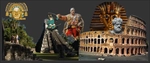
Introduction to World History
This publication describes in detail the principles by which historical periods and epochs are classified. It also outlines the organisational principles of the Shohistory historical library and guides you through its historical topics, explaining the scope and content of the library’s collections.
World's Ancient Civilisations (ca. 3300 BC – AD 500, and before...)
This is a collection of historical works covering the prehistoric and ancient periods of humanity’s development. All content relates to Ancient Greece, Rome, and the Roman Empire; the Indus civilisation; the early stages of the Chinese state and its historical development; Ancient Egypt; the Sumerian civilisation; the Inca and Maya; Japan; and the various civilisations that have existed across the world throughout history.
Medieval History Library (AD 500 – 1500.)
This is a collection of medieval-related publications and research. It includes both tutorial-like works and popular scientific content intended for history enthusiasts. Publications in this section present the countries and cultures that existed during what we term the medieval period (for clarification, see the Introduction to World History above). One by one, the works in this collection reveal the course of human historical development: the decline of civilisations and the rise of new ones in their place; the interwoven cultural links between successor societies; the concepts inherited from their predecessors; and, at times, the childish rejection or even humiliation of parental civilisational legacies. Viewed together, these materials offer a remarkable perspective on the patterns of history and provide a foundation for the analytical power needed to foresee contemporary developments and to imagine the possible pathways of humanity’s future.
Renaissance Epoch (ca. 1500 – 1800.)
The Renaissance period in human history is a very impressive period of the human evolutionary pathway. First true revolution, the Scientific Revolution; the second philosophy-prosperity period, after the Hellenistic impact on human perceiving of the world’s structure and of humanity’s position within the world-building architecture. The collection of publications presents all cultures that existed during the period and, one by one, like points on a map, reveals the stages of the world’s development—its differences and similarities, its contradictions and interrelations. The knowledge contained within these works provides the minimal intellectual foundation required of a modern educated individual who wishes to be well acquainted with humanity’s historical experience.
Modern Period (ca. 1800 – 1945.)
The modern period largely reflects the continuity of scientific development and the social reorganisation that finally breached long-standing restrictions. As a consequence of this scientific influence, restructured markets led to the industrial evolution as well. This collection contains the historical pathways of all countries whose development has influenced humanity worldwide: the great wars, the smaller conflicts, the political reconfigurations of the world, the shifting associations of civilisations, and many other historical processes you will discover here.