The Han Dynasty: Moral Consolidation and the Canonisation of the Imperial State (202 BCE – 220 CE)
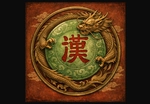
Moral Consolidation, Ideological Synthesis, and Imperial Durability
If Qin did indeed create the empire, then the Han dynasty stabilised and philosophically justified it. The Han dynasty constitutes the first long-lived imperial regime, and historiographically, it hath become the normative model of Chinese civilisation.
Liu Bang (Emperor Gaozu) was not of the aristocracy, but a former minor official. His ascendance signifieth the breakdown of hereditary elite monopoly; the triumph of military-political coalition over Qin technocracy; Han began as a coalition state, and not an ideological restoration.
Institutional Inheritance from Qin:
- Commandery-county system.
- Central bureaucracy.
- Legal administrative framework.
- Standardised measurement.
- Imperial territorial unity.
- Han did not reverse Qin centralisation, but softened it rhetorically.
Confucian Synthesis (under Emperor Wu (r. 141–87 BCE):)
- Confucianism became state orthodoxy.
- Imperial Academy established.
- Classical canon formalised.
- Ritual hierarchy revived symbolically.
This marked a profound shift: Qin = law-based legitimacy; Han = moral-cosmological legitimacy, yet the administrative skeleton remained Qin.
Economic and Territorial Expansion:
- Silk Road trade networks.
- Campaigns against Xiongnu.
- Annexation of Korea and Vietnam.
- Agricultural colonisation of frontier zones.
This representeth the first occasion upon which China operated as a macro-regional Eurasian actor.
Bureaucratic Maturation
- Civil service selection (proto-examinations).
- Written administrative reporting.
- Census documentation.
- Taxation systems.
- Imperial archives.
The bureaucracy expanded in complexity beyond Qin’s more rigid structure.
Cosmology and Political Theory (Han political thought integrated:)
- Confucian ethics.
- Yin-Yang cosmology.
- Five Phases theory.
- Mandate of Heaven theology.
The emperor became moral exemplar, ritual mediator, cosmic regulator; this is the full articulation of imperial cosmological sovereignty.
Eastern Han and Structural Strain (later Han saw):
- Eunuch factionalism.
- Land concentration.
- Peasant uprisings (e.g., Yellow Turbans).
- Regional militarisation.
By 220 CE, the dynasty fragmented, but unlike Qin collapse, Han fragmentation did not delegitimise empire. It created the Three Kingdoms period, yet the imperial model survived conceptually.
| Feature | Qin | Han |
|---|---|---|
| Duration | 15 years | 400+ years |
| Ideology | Legalist | Confucian synthesis |
| Centralisation | Radical | Maintained but moderated |
| Historiographical Tone | Tyrannical | Civilisational golden age |
| Legacy | Institutional foundation | Cultural canonisation |
Grand historiographical interpretation may be represented thus: Qin = Structural Revolution, Han = Ideological Stabilisation. Formally, the Qin constructed the machine, whilst Han indited the moral manual.
Together, they engendered: Bureaucratic empire; Moral cosmology; Territorial unity; Metrological standardisation; Political continuity model.
Every subsequent dynasty operated in dialogue with the Qin-Han synthesis.