Ancient China Historiographical Map: Shang State Structure, Feudal Order, Metrology, and Comparative Feudalism
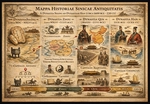
A Historiographical Map of Ancient China
The Shang Dynasty (circa 1600–1046 BCE)
The inaugural Chinese dynasty affording written records, evidenced by Oracle Bones. Characterised by a refined bronze culture and a localised political framework, centrally situated within the Yellow River Valley.
The Zhou Dynasty (circa 1046–256 BCE)
Western Zhou: Instituted the Mandate of Heaven alongside a system akin to feudalism (Fengjian).
Eastern Zhou: A temporal demarcation denoting political fragmentation, encompassing both the Spring and Autumn Period and the Warring States Period. This epoch witnessed the ascendance of Confucianism, Taoism, and Legalism.
The Qin Dynasty (221–206 BCE)
Subsequent to the Warring States Period, the State of Qin affected the unification of China under the auspices of Qin Shi Huang. This era signifies the transition from feudalism towards a centralised imperial state, predicated upon Legalist philosophy.
The Han Dynasty (202 BCE – 220 CE)
Founded by Liu Bang (Emperor Gaozu) following the decline of the Qin. The Han Dynasty consolidated the imperial system, established the Silk Road, and formally adopted Confucianism as the official state ideology.
⛩️ The Shang Dynasty: State Structure and Feudal Order

Historical Context and Governance Foundations
- The Shang dynasty did succeed the semi-mythical Xia and did precede the Zhou, holding dominion over the middle and lower Yellow River valley, with its capital established at Yin (presently Anyang) during its latter epoch.
- The Shang period doth represent the genesis of the earliest substantiated state system within China, characterised by hereditary kingship and divine legitimacy, decentralised regional administration through kinsmen lords, the ascendance of ritual bureaucracy, and urban centres flourishing in the Bronze Age.
- The king (王, wang) stood at the apex, serving simultaneously as political ruler, military commander, and high priest — the intermediary betwixt the mortal world and the ancestral spirits.
State Principles and Administrative Logic
For the purposes of generalisation (as is our wont), let us assemble the fields which shall serve as the basis for those state-managing tools concentrated within the purview of the ruler, and requisite for the successful governance of the realm.
- Theocratic Monarchy (in semblance, though more accurately, Monarchy): The Shang king was held to communicate directly with ancestral spirits by way of divination (per oracle bones), thus rendering governance an extension of religious authority.
- Political power (founded upon ritual legitimacy).
- Kinship Governance (宗法制度, zongfa zhidu): The realm was apportioned amongst royal kin and trusted generals. These feudal lords governed territories nominally under the king’s mandate, yet retained considerable local autonomy → An early iteration of feudal decentralisation, premised upon bloodline loyalty rather than bureaucratic appointment.
- Tributary Relations: Regional lords were obliged to dispatch tribute (贡, gong) — grain, jade, bronze, and captives — reinforcing dependence upon the royal centre.
- Military Integration: Armies were raised regionally; the king maintained control through rotational campaigns, ensuring feudal lords remained militarily subordinate.
- Ritual and Record-Keeping: The Shang maintained a central archive of oracle bone inscriptions, which served both as religious records and administrative instruments — tracking harvests, tributes, and omens.
Here we shall expose to our esteemed reader the Shang Feudal architecture, with listed all major actors, and propose to review and compare this social construction with medieval european commonly built feudalistic design.
Major Feudal Domains and Their Distinctions - Shang Period
The definition of the County, well-known to the European reader, may be implemented to the reviewing period; however, for more accurate reviewing, the author deems it appropriate to divide the state into larger territorial units first.
🗡️ The Royal Core (Yin / Anyang):
- Characteristics: political and ritual capital, a dense concentration of elite tombs and workshops, controlled redistribution of bronze, jade, and weapons — evidence of centralised resource control.
🗡️ Eastern Domains (Henan–Shandong region):
- Governed by royal kin; major centres such as Zhengzhou and Yanshi, economically vital for agriculture and metallurgy, maintained close religious ties with the capital through shared ancestor cults.
🗡️ Western and Frontier Domains (Shaanxi, Shanxi):
- Semi-autonomous; often included non-Shang populations integrated through alliance or subjugation, provided frontier defence and horses, exhibited less ritual integration — a more militarised governance model.
🗡️ Southern Tributaries (Huai River basin):
- Ethnically diverse; governed through vassal chieftains (fang bo), contributed exotica (tortoiseshell, ivory, feathers) employed in divination and ritual display.
And, in final review, a comprehensive understanding of the hierarchical design enriches the picture.
Whilst the Shang state was not “feudal” in the later Zhou sense, it possessed proto-feudal characteristics — regional hereditary domains tied by kinship and allegiance.
Measurements during the Shang Dynasty
The Shang dynasty doth stand at the very threshold 'twixt ritual metrology and administrative metrology. Measurements existed primarily as ritual and practical instruments within a theocratic society — firmly tied to bronze production, architecture, land division, and sacrificial systems. No surviving codified system (akin to the later Qin legal standardisation) hath yet emerged; instead, measurement standards were embedded within artefacts (bronze vessels, ceramics, tools, weights). The data available are archaeological, not textual — inscriptions upon bronzes and archaeological correlations afford us unit reconstructions.
Measurement in the Shang worldview formed a part of ritual order, not a purely utilitarian calculation. The King, as ritual authority, defined cosmic balance through measured space — palace axes aligned astronomically and spiritually. Units of volume and weight embodied the hierarchy of offerings: one dou for nobles, one hu for ancestors, and so forth. Thus, measurement = cosmology = governance — an equation inherited and later moralised under the Zhou “Mandate of Heaven.”
The Shang system established the continuity of unit names (chi, dou, jin, liang) that did endure for two millennia. Functionally, it bridged ritual proportionality and administrative precision. Archaeological consistency across disparate sites (Henan, Shanxi, Hubei) doth imply central calibration of production, though not yet empire-wide standardisation. Conceptually, measurement constituted a sacred act — to measure was to align human order with divine geometry.
| Unit | Chinese | Approx. Modern Value | Context / Function | Archaeological Evidence |
|---|---|---|---|---|
| Chi | 尺 | ≈ 19.5–20.5 cm | Basic unit of linear measure | Bronze rulers (Anyang, Yinxu); layout of royal tombs |
| Cun | 寸 | 1/10 chi ≈ 1.95–2.05 cm | Artisanal detail, toolmaking | Proportional relations in bone artefacts |
| Zhang | 丈 | 10 chi ≈ 1.95–2.05 m | Architectural design, planning | Palace and altar dimensions |
| Bu | 步 | ~6 chi ≈ 1.2 m | Field and land pacing | Estimated from site alignments |
| Li | 里 | Estimated 300 bu ≈ 350–400 m | Not yet formalised | Concept inherited and stabilised later under Zhou |
Variability amongst sites (20–25 mm per chi) doth suggest no absolute national standard, but only regional royal workshops’ control.
Bronze measuring rods found at Anyang (Yinxu) indicate an attempt at standardisation within the royal metallurgical complex — a precursor to the formal Qin unification.
Chi was already the core term, later inherited unchanged into Zhou, Qin, and Han.
| Category | Unit | Approx. Modern Equivalent | Material Evidence | Function |
|---|---|---|---|---|
| Weight | Jin (斤) | ≈ 200–250 g (estimated) | Bronze balance weights from Yinxu | Trade in bronze and jade |
| - | Liang (兩) | 1/16 jin ≈ 12–15 g | Smaller bronze weights | Precious materials |
| Volume (dry/liquid) | Dou (斗) | ≈ 1.9–2.1 L | Bronze ritual vessels | Measuring grain or wine in sacrifices |
| - | Sheng (升) | 1/10 dou ≈ 190–210 mL | Miniature bronze vessels | Standardised ritual offerings |
| - | Hu (斛) | 10 dou ≈ 19–21 L | Larger bronzes, grain storage jars | Agricultural inventory |
Let us trace the measurement evolution path within ancient China across the periods we have already examined.
| Feature | Xia (semi-legendary) | Shang | Zhou | Qin |
|---|---|---|---|---|
| Chronology | c. 2070–1600 BCE | c. 1600–1046 BCE | 1046–256 BCE | 221–206 BCE |
| Evidence type | Mythical, archaeological inference | Artefactual (bronze, bone) | Inscriptions + standards | Legal codes, physical standards |
| Length unit | Chi (uncertain) | Chi ≈ 20 cm | Chi ≈ 23 cm | Chi fixed at 23.1 cm |
| Volume unit | Proto-dou | Dou, Sheng, Hu (ritual) | Same system with inscriptions | Fully standardised (Qin hu, Qin dou) |
| Weight unit | — | Jin, Liang (approximate) | Used in trade & taxation | Legally fixed bronze weights |
| Metrological function | Symbolic (cosmic order) | Ritual-administrative | Administrative & economic | Bureaucratic & legalised |
| Authority source | Mythical sage-kings | Divine-ancestral legitimacy | Moral “Mandate of Heaven” | Legalist imperial decree |
Comparative Analyses: China's Feudalism versus European Feudalism

Herein, the collective voice of our authors doth unite, avowing that these tables—comparing Shang feudal architecture with its European mediaeval counterpart—are conceived for comparative intent. They are, however, exceedingly speculative and ought not be deployed in any scholarly pursuit as an authoritative font.
We did pledge ye something… Ah, precisely. Let us compare the feudal structure of the Shang Dynasty epoch with the mediaeval feudalistic state architecture of Europe.
- The Shang dynasty’s feudal framework doth indeed bear resemblance to the European mediaeval feudal system in sundry structural manners, albeit their underlying worldviews and legitimising mechanisms do differ sharply.
| Aspect | Shang (c. 1600–1046 BCE) | Mediaeval Europe (c. 9th–14th CE) | Analogy |
|---|---|---|---|
| Core model | Kin-based vassalage (royal relatives ruling semi-autonomous domains) | Vassalage (lords granted fiefs by a king) | Hierarchical decentralisation |
| Land tenure | Land held by hereditary right under royal mandate | Land held in fief under oath of loyalty | Both link land → loyalty |
| Tributary duties | Grain, bronze, jade, captives to the king | Taxes, crops, or military service to overlord | Economic dependence on centre |
| Military obligation | Regional armies pledged to royal campaigns | Knights & retainers pledged to military service | Military reciprocity |
| Political integration | Loose confederation of kin domains | Loose confederation of fiefdoms | Polycentric sovereignty |
| Ritual legitimisation | Ancestor worship & divine mediation | Divine right & Church sanction | Sacred justification of authority |
| Category | Shang | Europe | Difference |
|---|---|---|---|
| Ideological base | Theocratic-ancestral: king mediates with spirits (Shangdi) | Christian-theological: monarch under God, legitimised by Church | Religious cosmology distinct |
| Social mobility | Kinship and lineage dominance | Nobility by birth, but knightly merit possible | Shang more rigidly kin-based |
| Bureaucracy | Minimal; ritual archives, diviners, scribes | Ecclesiastical and secular bureaucracy grew later | Europe evolved complex administration |
| Feudal law | Customary and ritual, not codified | Feudal law codes, contracts, charters | Shang lacked formal legal system |
| Temporal span | Early Bronze Age origin | Mediaeval, post-classical | Over two millennia apart technologically and economically |
✏️ Abbreviating may be outlined thus: the form (hierarchical decentralisation) is similar; the logic (religious-kin versus legal-feudal) is different.
Both systems represent a transitional mode between tribal authority and bureaucratic statehood:
- Decentralised rule tied by personal or sacred obligation.
- Land and ritual power distributed among sub-rulers.
- Reciprocal dependency: the centre relies on vassals for resources and armies, whilst vassals need central recognition for legitimacy.