Theogony (Origin of the Gods)
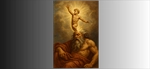
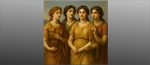
We begin our song with the Heliconian Muses who hold high and holy mount Helicon and with their soft feet dance upon the violet waters and the altar of Cronos’ mighty son.
After bathing their tender flesh in the Permessus, Hippocrene, or sacred Olmedius, they perform their chorals on the highest peaks of Helicon, sublime beauty flowing freely from their feet.
Starting there and shrouded in a great mist, they travel by night, their beautiful voices singing to aegis-bearing Zeus, to queen Hera of Argos who walks with golden sandals, to Athena, gleaming-eyed daughter of Zeus, to Phoebus Apollo, to shedder of arrows Artemis, to Earth-holder and Earth-shaker Poseidon, to venerable Themis, to darting-eyed Aphrodite, to golden-crowned Hebe, to fair Dione, to Leto and Iapetus and wily Cronos, to Eos and great Helios and bright Selene, to Gaia and great Oceanus and black Nyx, and to all other immortals who always are.
- Eos = Dawn
- Helios = Sun
- Selene = Moon
- Gaia = Earth
- Oceanus = the River that circles the world (or just Oceans)
- Nyx = Night
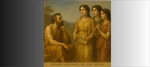
The Muses once taught Hesiod a beautiful song as he tended lambs under holy Helicon.
First, the goddesses, Olympian Muses, daughters of aegis-bearing Zeus, spoke these words to me: “Shepherds in fields, foul disgraces, nothing but bellies—we know how to make lies into truth, and we know how to speak truth when we wish.”.
So saying, Zeus’ eloquent daughters plucked a staff, a fine branch of blooming laurels, and gave it to me; they blew a divine voice into my mouth so I would glorify what was and what will be; and they ordered me to sing of those who always were and of themselves first and last.
- 'But why do I speak of an oak or a rock?', in other words: “why do I speak of unimportant things?”
- Ouranos = Sky or Heavens
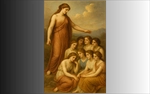
Mnemosyne, guardian of the Eleutherae hills, joined with the son of Cronos on Pieria and bore the Muses to shun evil and dispel distress. For nine nights, counselor Zeus mixed with her in her sacred bed, away from the other gods. A year later, after the cycle of the seasons and the passing of many months and days, she bore nine like-minded maidens—their breasts filled with song, their spirits free of woe—near the highest peak of snowy Olympus, a place of splendid choruses and beautiful mansions, where the Charities and Himeros have their homes and festivities. Their lovely voices celebrate the laws and customs of all the immortals in the songs they send forth.
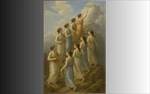
On their way to Olympus, their beautiful voices filled the air with a divine song, the black earth echoed as they sang, and a lovely noise rose beneath their feet as they went to see their father, lord of the heavens and wielder of the fiery thunderbolt, who defeated his father Cronos and distributed fairly the powers and honors to the immortals.
These were the songs of the Muses, whose homes were on Olympus, the nine daughters of great Zeus: Clio, Euterpe, Thalia, Melpomene, Terpsichore, Erato, Polymnia, Ourania, and Calliope, who was superior to all for she also accompanied revered kings. When a Zeus-nourished king is born, great Zeus’ daughters honor him by pouring sweet dewdrops on his tongue, so words flow like honey from his mouth. All his people look upon him as he solves disputes with sound judgment, and his eloquent and truthful words quickly and fairly resolve even the bitterest conflict. This is why kings are wise, for when people do harm in the assembly, kings easily halt calls for revenge and appease both sides with gentle words. In markets they treat him with deference like a god, and he stands out in a crowd. Such are the gifts given to mortals by the Muses.
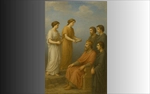
Muses and far-shooting Apollo bring singers and lyre players to the earth, but Zeus makes kings; and mortals loved by the Muses are blessed, for sweet words flow from their mouths. If a singer who serves the Muses sings about the famous deeds of ancient men and women and the blessed ods who live on Olympus, then mortals whose souls are fresh with pain and whose hearts burn with grief will instantly forget their suffering and pain, diverted by the gifts of the goddesses.
Welcome, children of Zeus. Sing to me a lovely song, a song of the divine race of immortals who always are, those born of Gaia, starry Ouranos, and dark Nix and nourished by salty Pontus.
Tell us how the gods and earth first came to be, and the rivers, the infinite seas that swell with rage, the shining stars, and the wide heavens above.
Tell us how the gods were born, givers of fortune, how they divided riches and distributed honors, and how they first took craggy Olympus.
Start at the beginning, Muses with homes on Olympus, and tell me: who was born first?
First there was Chaos, then broad-chested Gaia, the steadfast seat of all immortals who live upon the snowy peaks of Olympus, then murky Tartarus in the depths of the wide earth, and Eros, most beautiful of the immortal gods, who weakens the limbs and overwhelms the minds and wise counsel in the breasts of all gods and humans.
Chaos gave birth to Erebus and black Nix, and from Nyx came Aether and Hemera, conceived after Nyx joined in love with Erebus.
- Eros = Desire
- Erebus = Darkness
- Aether = Upper Sky (or air that the gods breathe)
- Hemera = Day
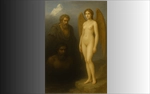
First, Gaia bore starry Ouranos, her equal, to envelop her on all sides so she would be the ever-secure home for the blessed gods.
Then she bore tall Ourea,6 pleasant refuge for the goddess Nymphs of the mountain forests, and the sterile, swelling seas of Pontus.
All of these she bore alone. Then she bedded Ouranos and bore deep-whirling Oceanus, Coeus, Crius, Hyperion, Iapetus, Theia, Rhea, Themis, Mnemosyne, golden-crowned Phoebe, and fair Tethys.
Then wily Cronos was born, her youngest and most dreadful child, who hated his fearsome father.
- The Ourea are ten gods who personify different mountains, including Olympus, Helicon, and Etna. The Roman equivalent of the Ourea are called Montes, which is the origin of the word mountains.
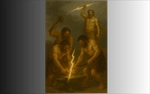
Then she bore the violent-hearted Cyclopes: Brontes, Steropes, and spirited Arges.
They gave thunder to Zeus and built thunderbolts, and they looked like the gods in every way but one: they had only one eye in the middle of their foreheads.
Because of this single, circular eye, they were called Cyclopes.
Their strength was great, as was their craft.
But Gaia and Ouranos gave birth to three unspeakably huge and powerful sons: Cottus, Briareus, and Gyges, arrogant children. From their shoulders sprang a hundred monstrous arms, with fifty heads on each pair of sturdy shoulders, and immense strength in their massive forms.
These were the worst all those born to Gaia and Ouranos. Their father hated them from the moment they were born and hid them all in a secret corner of Gaia, never allowing them into the light, and Ouranos rejoiced at his foul work. But Gaia groaned at the strain within her depths and devised a wicked plan.
She quickly made a large scythe using gray, impenetrable steel and showed it to her children.
Then she said to them, as her heart grieved: “My children, born to a wicked father, if you choose to obey, then avenge your father’s foul disgrace, for he was the first to plot evil deeds.”
So she said, but fear seized them, and no one said a word. But crooked-counselor Cronos boldly answered his noble mother, saying: “Mother, I pledge to complete this task; I do not care about our despicable father, for he was the first to plot evil deeds.”
- The Cyclopes are personifications of lightning and thunder: Brontes means Thunder, Steropes means Lightning, and Arges means Bright
- The Greek word for Cyclopes is κθκλοτερής, which means round or circular.
Hearing this, colossal Gaia rejoiced in her heart.
She hid Cronos in an ambush, put a sharp-toothed sword in his hands, and explained to him the whole plan. When Ouranos came, towing night, he stretched himself out over Gaia, desiring her love. Cronos reached out with his left hand, took the jagged-toothed sickle in his right, and quickly cut off his dear father’s genitals and threw them behind him. But they did not fall in vain, for all the blood-red drops that fell were caught by Gaia, and in time, she bore the mighty Erinyes, the great Giants with bright armor and long spears, and the Nymphs called Meliae across the endless earth.
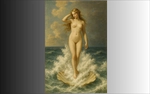
Soon after the genitals were cut by the sickle and thrown into the agitated sea, they were carried through the water for a long time, and a white foam sprang from the deathless flesh, and inside grew a young woman.
First she came to sacred Cythera and then to sea-bathed Cyprus, where a beautiful goddess emerged with grass growing around her slender feet. Gods and mortals call her Aphrodite, for she was born from the sea-foam, and fair-crowned Cytherea, for she reached Cythera, and also Cyprogenes for she was born on sea-bathed Cyprus, and Philommedes10 for she sprang from genitals. Eros followed her, and fair Himeros stayed with her from the moment she was born until she joined the race of the gods.
She had this honor from the beginning and obtained by lot from humans and immortal gods the secrets, smiles, deceptions, sweet delights, friendliness, and gentleness of young women.
Their father, great Ouranos, rejected his sons and nicknamed them Titans, for he said they foolishly stretched to commit a great deed and would one day pay a price for their actions.
- Erinyes = Furies
- Philommedes literally means “lover of genitals”
- The word “titan” comes from the Greek word titano, which means to stretch, extend, or exert oneself. In other words, Ouranos is saying that the Titans went too far in their attack on him and would be punished for it one day.
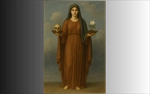
Nyx, though she had not slept with any other gods, bore terrible Moros, black Ker, and Thanatos, Hypnos, the tribe of Oneiroi, and Momus, deadly Oizys, and the Hesperides, who cared for the beautiful, golden apples and the trees that bore them beyond famed Oceanus.12 She also bore the Moirai and the pitilessly punishing Keres—Clotho, Lachesis, and Atropos—who assign good and evil to mortals at birth, who pursue the wrongs of both mortals and gods, and who never abandoned their terrible fury until they gave their dire punishments to wrongdoers.
And deathly Nyx bore Nemesis, bringing woe to mortals, and then bore Apate, Philotes, mournful Geras, and hard-hearted Eris.
- Moros = Doom
- Ker = Deadly Fate
- Thanatos = Death
- Hypnos = Sleep
- Oneiroi = Dreams
- Momus = Satire/Mockery
- Oizys = Misery
- Hesperides = Evening
- Moirai and Keres are both terms representing the Fates. The three Fates mentioned here each perform a specific task when a child is born. Clotho spins the thread of life; Lachesis measures the allotted thread (time) each life is given; and Atropos cuts the thread of life.
- Nemesis = Vengeance
- Apate = Deceit
- Philotes = Friendship
- Geras = Old Age
- Eris = Strife
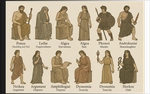
And hated Eris bore woeful Ponos, Lethe, Limos, the lamentable Algea, the Hysminai, the Machai, the Phonoi, the Androktasiai, the Neikea, the Pseudea, the Logoi, the Amphillogiai, the Dysnomia, Atë, all similar to each other, and Horkos, who brings great misery to mortals when someone willingly swears a false oath.
Pontus fathered truthful and sincere Nereus, his oldest child; they call him Old Man, for he is gentle and kind, never forgets customs, and makes fair and honest plans. Then he mixed again with Gaia and bore great Thaumas, arrogant Phorcys, fair-cheeked Ceto, and Eurybia, whose heart is made of steel.
Many children, all greatly desired, were born in the barren sea to Nereus and fair-haired Doris, daughter of ever-circling Ocean: Protho, Eucrante, Sao, Amphitrite, and Eudora, Thetis, Galene, Glauce, and Cymothoe, swift Speo, beautiful Thalia, Pasithea, Erato, rosy-armed Eunice, charming Melite, Eulimene, Agave, Doto, Proto, Pherusa, Dynamene, Nessea, Actaea, Protomedea, Doris, Panope, lovely Galatea, fair Hippothoe, rosy-armed Hipponoe, and Cymodoce who, along with Cymatolege and fine-ankled Amphitrite, calm the dark sea’s waves and the stormy wind’s blasts; and Cymo, Eone, fair-crowned Halimede, smiling Glauconome, Pontoporea, and Leagore, Eusagore, Laomeda, Polynoe, and Autonoe, Lusianassa, Euarne, who is fine in figure and blameless in beauty, and Psamathe, who is beautiful in body, and divine Menippe, Neso, Eupompe, Themisto, Pronoe, and Nemertess, who has the mind of her immortal father.
These came from the illustrious Nereus: fifty daughters all able to do great work.
- Ponos = Hardship and Toil
- Lethe = Forgetfulness
- Limos = Starvation
- Algea = Pain
- Hysminae and Machai = various aspects of battle and combat
- Phonoi = Murder
- Androktasiai = Manslaughter
- Neikea = Argument
- Pseudea = Lies
- Logoi = Stories
- Amphillogiai = Disputes
- Dysnomia = Anarchy
- Atë = Hate and Ruin
- Horkos = Oath
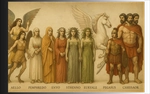
Thaumas wed Electra, deep-flowing Oceanus’ daughter, and she bore swift Iris and the fair Harpies, Aello and Ocypete, who had swift wings and soared high up in the air like the wind or the birds.
To Phorcys, Ceto bore the fair-cheeked, grey-haired Graeae, so-called by mortals and immortals alike: fine-robed Pemphredo and saffron-veiled Enyo.
And she bore the Gorgons who live beyond famed Oceanus at the edge of Nyx where the clear-voiced Hesperides dwell: the immortal and ageless Sthenno and Euryale, and the mortal Medusa, who met a foul end.
Dark-haired Poseidon slept with Medusa in a soft meadow surrounded by spring flowers.
When Perseus beheaded her, out sprang great Chrysaor and the horse Pegasus. one named for the sword he held, the other for being born beside the waters16 of Oceanus.
Pegasus left the earth, mother of sheep, and flew to the immortals, and he lives in Zeus’ house, bringing thunder and lightning to counselor Zeus.
Chrysaor joined with Callirhoe, great daughter of Oceanus, and she bore three-headed Geryon, who was killed by mighty Heracles beside his tottering cattle on sea-bathed Erytheia on the day he drove the broad-chested cattle across the Oceanus streams to sacred Tiryns and killed Orthus and herdsman Eurytion in the dark stables across famed Oceanus.
Ceto also bore in a hollow cave another terrible monster who is unlike any mortal or immortal god: divine, dauntless Echidna, who is one-half fair-eyed, beautiful nymph and one-half terrible, quick-moving serpent who eats raw flesh in the hidden places under the earth. Her cave is beneath a hollow boulder, far from immortal gods and mortal humans. There the gods assigned pitiful Echidna glorious houses to live in, and the immortal and ageless nymph keeps watch among the Arima under the earth.
It is said that the quick-glancing maiden Echidna joined with terrible, violent, and lawless Typhon, became pregnant, and bore fearsome children. First came the Orthrus, Geryon’s dog; then she bore the unmanageable, unspeakable Cerberus, eater of raw flesh, the bronze-voiced dog of Hades, fifty-headed, merciless, and mighty.
Then she bore foul-minded Hydra of Lerna, reared by the white-armed goddess Hera when she was monstrously angry with mighty Heracles. But Heracles, son of Zeus and of Amphitryon, slew the Hydra with pitiless bronze, aided by warlike Iolaus and plunderer Athena’s counsel.
- The Greek word πηγή (pegai) means water.
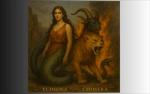
And Echidna bore the invincible, fire-breathing Chimera: terrible, huge, swift, and powerful.
She had three heads: a savage lion, a she-goat, and a serpent, a mighty dragon; her front was lion, her middle was goat, her back was serpent, and she breathed terrible fire. She was slain by Pegasus and noble Bellerophon. Chimera, subdued by Orthrus, bore deadly Sphinx, scourge of the Cadmeans, and the Nemean lion, the bane of mortals, whom Hera, glorious wife of Zeus, raised and sent to live in Nemea.
While dwelling there, it laid waste to the mortal races and ruled Tretos in Nemea and Apesas; but the strength of Hercules overpowered it.
Ceto made love to Phorcys and bore her youngest child, a terrible snake who guards the golden apples in the dark places at the end of the world. These, then, are the children of Ceto and Phorcys.
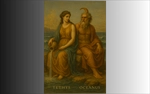
Tethys bore to Oceanus the twisting rivers: Nilus, Alpheus, the deep-swirling Eridanos, Strymon, Meander, beautiful-flowing Ister, Phasis, Rhesus, the silver-waving Achelous, Nessus, Rhodius, Haliacmon, Heptarorus, Grenicus, Aesepus, divine Simoeis, Peneius, Hermus, fair-flowing Caïcus, the great Sangarius, Ladon, Parthenius, Euenus, Aldescus, and the divine Scamander.
And she bore divine daughters who raised young boys into men along with lord Apollo and the Potamoi, for this was Zeus’ charge to them: Peitho, Admete, Ianthe, Electra, Doris, Prymno, divine-formed Ourania, Hippo, Clymene, Rhodea, Callirhoe, Zeuxo, Clytie, Idyia, Pasithoe, Plexaura, Galaxaura, welcoming Dione, Melobosis, Thoe, shapely Polydora, fair-formed Cerceis, doe-eyed Pluto, Perseis, Ianeira, Acaste, Xanthe, charming Petraea, Menestho, Europa, Metis, Eurynome, saffron-veiled Telesto, Chryseis, Asia, fair Calypso, Eudora, Tyche, Amphiro, Ocyrhoe, and Styx, who is without a doubt the greatest of them all.
These were the oldest of the maidens born to Oceanus and Tethys, but there are many others: three-thousand thin-ankled daughters of Oceanus spread across the earth and watery depths, all equal, shining children of goddesses.
And many other loud-flowing rivers, sons of Oceanus, were born to queen Tethys; their names are difficult for a mortal to recite, but each is known by those who dwell near them.
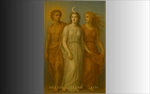
And Theia, taken in love by Hyperion, bore great Helios, bright Selene, and Eos, who shines for all mortals upon the earth and for the gods who hold the broad heavens.
And Eurybia, divine among goddesses, joined in love with Crius and bore great Astraeus, Pallas, and Perses, famed for his knowledge.
And Eos, a goddess in love with a god, bore to Astraeus the violent winds: clearing Zephyrus, swift-moving Boreas, and Notus.
After this, Eos bore early-born Heosphoros and the shining stars that crown the heavens.
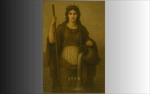
Oceanus’ daughter Styx mixed with Pallas and bore in her palace Zelus, beautiful-ankled Nike, Kratos, and Bia, famous children all.
They have no house but the house of Zeus, no seat, and no path besides the one the god gives them, and always sit beside thundering Zeus.
So Styx, immortal daughter of Oceanus, decided on the day the Olympian hurler of lightning called all immortal gods to great Olympus and said that whoever fights against the Titans would not lose their privileges and would retain all of their honors among the immortal gods; nd those who were denied honor by Cronos would gain honor and privilege, as is their right.
So incorruptible Styx and her children, following her father’s plan, were first to go to Olympus, and Zeus honored her and gave her great gifts, making her the great oath of the gods and keeping her children beside him from that day on.
And everything that he promised, he fulfilled, and he himself rules with greatness and might.
- The gods swore all their oaths upon the Styx.
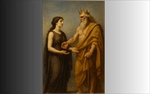
Phoebe came to the much desired bed of Coeus, and the goddess, pregnant with a god’s love, bore dark-robed Leto, always gentle and kind both to humans and to the immortal gods—gentle from the start, and kindest of those on Olympus.
Phoebe also bore honorable Asteria, whom Perses led to his great house to become his loving wife.
Asteria bore Hecate, whom Zeus, Cronos’ son, honored above all others. He gave her splendid gifts: a portion of the earth and the sterile sea, a share of the honor from the starry skies, and the highest honors from the immortal gods.
Now, whenever humans upon the earth pray for favors by offering beautiful sacrifices, they call on Hecate. Much honor follows the ones whose prayers the goddess kindly accepts, and fortune follows those so blessed—such is her power.
For all those born to Gaia and Ouranos were granted honors, and Hecate had her share too.
Nor did the son of Cronos seek to deprive her of any honor she received from the Titans, and she retains all she was given in the beginning.
Nor does this goddess, an only child, have fewer honors on the earth, in the sky, or in the sea; in fact, she has more, for Zeus himself honors her.
When she comes and proudly aids someone, that person will surpass all others in the assembly.
When men arm themselves for deadly combat, the goddess stands beside her chosen side, eager to grant victory and extend glory. She stands beside revered kings during trials, she stands beside horsemen that she chooses, and she stands beside and helps those competing in contests.
And when one gains victory by strength or force, he carries his prize with ease and joy and honors his parents. And to those who work the gusty gray sea and pray to Hecate and the roaring Earth-shaker, the great goddess easily grants a great haul of fish, and just as easily takes it away, if her spirit so wishes. And along with Hermes, she excels at increasing livestock in pens: herds of cattle and wide goats, and flocks of wooly sheep; she can strengthen a herd or flock or weaken it—whatever her spirit desires. And though she is her mother’s only child, she is granted great honors among the immortals. And Cronos’ son made her nurse to all children who see with their eyes the light of all-seeing Eos. Thus she was a nurse from the very start, and these are her honors.
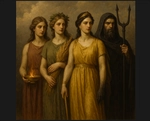
Rhea was tamed by Cronos and bore him glorious children: Hestia, Demeter, golden-sandaled Hera, mighty Hades whose ruthless heart lived beneath the earth, the loud-sounding Earth-shaker, and counselor Zeus, father of gods and mortals, whose thunder shakes the wide earth.
Great Cronos gulped the children down as soon as they emerged from kneeling Rhea’s divine womb.
He wished to prevent Ouranos’ famed children from becoming king over the immortals, for he learned from Gaia and starry Ouranos that, though he was strong, his own son was fated to overthrow him through the plans of great Zeus; thus he kept constant watch and swallowed his children whole, bringing Rhea great grief.
So when she was about to bear Zeus, father of gods and mortals, she begged her dear parents, Gaia and starry Ouranos, to devise a plan to let her bear her child in secret and avenge her father’s fury and the fury of her children whom wily Cronos had swallowed.
They listened to their dear daughter and obeyed her, revealing to her all that was destined to happen to king Cronos and his stout-hearted son.
Then they sent her to Lyctus, in the rich lands of Crete when she was ready to bear her youngest, great Zeus; once there, gigantic Gaia would receive him, nurse him, and raise him.
So Rhea carried him through the quick black night to Lyctus, took him in her hands, and hid him in a cave deep within holy Gaia, in the dense forests of Mount Aegaeon.
Then she took a stone, wrapped it in swaddling clothes, and gave it to Ouranos’ son, the Titan king. He grabbed the stone and swallowed it cruelly, unaware that his son remained free and untroubled and would one day overpower him, drive him from his place of honor, and become king of the immortals.
- Pytho is the ancient name for Delphi, so the stone in question is the Omphalos Stone at Delphi.
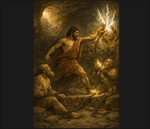
Then he freed his uncles, the Cyclopes, sons of Ouranos, from the bonds Cronos foolishly inflicted upon them. In return for his kindness, they gave him thunder, blasting thunderbolts, and lightning, which before Gaia had concealed.
With these, Zeus rules over mortals and immortals.
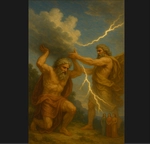
Iapetus married Clymene, Oceanus’ fair-ankled daughter, went to bed with her, and she bore stout-hearted Atlas, illustrious Menoetius, shrewd and sly Prometheus, and scatter-brained Epimetheus, who became the bane of all mortals who work for their bread, for he was the first to accept Zeus’ moulded maiden.
Far-seeing Zeus hurled arrogant Menoetius down to Erebus with a thunderbolt because of his foolishness and his reckless vanity.
Atlas is forced to stand at the ends of the earth in front of the clear-voiced Hesperides and hold up the wide heavens with his head and tireless arms, for this is the fate counselor Zeus assigned to him.
And Zeus bound wily Prometheus in painful, unbreakable chains that were driven through the middle of a pillar, and he sent a wide-winged eagle to eat his immortal liver, but each night the liver grew back as much as the wide-winged bird had eaten that day. But Heracles, son of fair-ankled Alcmene, killed the eagle, repelling the foul fate of Iapetus’ son, freeing him from suffering, and adding to Theban-born Heracles’ great glory upon the bountiful earth.
High-ruling Olympian Zeus approved, for he wished to honor his revered son, and so gave up the anger he held against Prometheus for matching wits with Cronos’ mighty son.
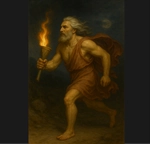
For when gods and mortals met in Mecone, Prometheus cleverly divided a great ox and set it before him, hoping to deceive Zeus.
First, he set down before him flesh and rich, fat entrails and hid them in the ox’s stomach; then he cleverly set down the white ox bones and covered them with shining fat.
Then the father of gods and mortals said to him: “Dear son of Iapetus, noblest of all the gods, you have divided the portions unfairly.”
So said all-knowing Zeus, mocking him.
But with a smile, crooked-counselor Prometheus replied to him, not forgetting his clever trick: “Glorious Zeus, greatest of all immortals, choose whichever one your heart desires.”
So he said, deceptively.
All-knowing Zeus spotted the deception, but he desired evil for mortals, which he would fulfill.
He took the white fat with both hands, and when he saw the white ox bones and realized the deception, he exploded with rage, his mind filled with malice.
Ever since then, mortals burn white bones on smoking altars in offering to the gods.
And a fuming cloud-gatherer Zeus told him: “So, dear son of Iapetus, noblest of all the gods, you did not forget your clever tricks after all.”
So spoke an angry, all-knowing Zeus.
And because of this deception, he refused to give the might of eternal fire to the ash trees for mortals who live upon the earth.
But the son of Iapetus tricked Zeus again by stealing the far-shining gleam of eternal fire in a hollow fennel stalk.
It burned deep in high-thundering Zeus’ soul when he saw the far-shining gleam of fire among mortals, so he devised a wicked punishment for humans.
Following the plans of Cronos’ son, famed Hephaestus molded from earth a beautiful girl.
Then the grey-eyed goddess Athena dressed her in silvery clothes and covered her head with a finely-crafted veil, a true wonder.
Around her head Pallas Athena first placed a garland of fresh flowers of the meadow to arouse desire and then added a golden diadem made by the hands of the famed Lame One, Hephaestus, to please Zeus, his father.
On this he added many finely-made designs, terrible beasts that the land and sea nourish; he made many of these, each one a shimmering miracle, as real as a living, speaking creature.
- This relates to an early belief that fire lived within trees; and ash trees were very common in Greece.
- Lampadedromia (λαμπαδηδρομία): A torch race, Held in Athens and other cities; associated with: Prometheus, Hephaestus, Athena
- Teams ran with torches; the winner was the one whose flame stayed lit, this is the closest ancient precedent to the modern relay.
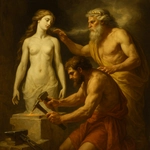
When he had built this fine but evil creature, the price for fire, he led her out to the other gods and mortals, resplendent in the adornments of Zeus’ grey-eyed daughter.
Gods and men alike were awed when they saw the steep deception, which men could never control.
For she was mother to the race of females, who live with men but are their greatest foe, always a friend of luxury, never of poverty.
Just as bees in roofed beehives feed drones, their partners in their foul deeds—every day, all day long until the sun goes down, the bees hurry about building their white honeycombs, while the drones sit inside the roofed beehives feeding their stomachs on the toil of others—so also did high-thundering Zeus create women to be the bane of mortal men, partners in painful deeds.
And he exchanged another good for evil: he who flees marriage and women’s foul deeds and refuses to marry comes to old age deprived of a caretaker; when he lives, he lacks nothing, but when he dies his relatives divide his fortune.
The man who marries a worthy wife, one whose mind is similar to his own, will see good and evil in balance throughout his life.
But the man who takes a troublemaker for a wife will know endless, incurable pain in his mind and heart during his life.
- each Olympian contributes attributes to the Hephaestus creature:
- Athena: clothing, weaving skill
- Aphrodite: desire, seductive charm
- Hermes: deceitful mind, cunning speech (doloi kai muthoi)
- The Graces / Peitho (in some lines): adornment, persuasion
- Zeus orders this — but Hesiod does not describe Zeus physically breathing life into her.
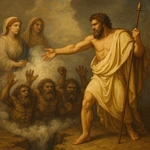
Thus, no one can deceive the mind of Zeus.
Not even Iapetus’ son, gracious Prometheus, could escape a foul fate, for despite his sharp mind, a terrible burden holds him down.
When Ouranos first grew angry with Briareus, Cottus, and Gyges, he bound them in strong chains, for he hated their arrogance, their looks, and their size and he made them live beneath the broad earth.
So they sat below, at the earth’s edge, living in pain and suffering greatly, their hearts filled with grief.
But the son of Cronos and the other immortals born in love to fair-haired Rhea and Cronos returned them to the light with the advice of Gaia, who told them the whole story and showed them how these creatures would help them win and gain great glory.
The Titans and those born to Cronos would battle against one another for a very long time and suffer greatly—the Titans from high Othrys and from Olympus the gods, who bring good things and who were born to fair-haired Rhea after sleeping with Cronos.
For ten long years they fought one another, their spirits filled with rage.
And there was no resolution in sight, for both sides were evenly divided and the war’s outcome was uncertain.
But when Zeus offered the Hecatoncheires nectar and ambrosia, which the gods themselves eat, their hearts and spirits were lifted.
The the father of gods and mortals addressed them and said to them:
“Listen to me, bright children of Gaia and Ouranos, so I can say what is in my heart. We have battled every day for a long time, each seeking victory and power, the Titans and we gods who were born from Cronos. So use your great strength and untouchable hands and fight with us against the Titans, for we are your kind friends who freed you from your painful bonds and brought you out of the bitter dark and into the light.”
- Ambrosia is the food of the gods, and nectar is the drink.
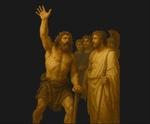
So he said, and at once great Cottus replied:
“Noble sir, you say what we already know. We know your mind and thoughts are superior and you defend the gods against icy ruin. Your wisdom, lord son of Cronos, brought us out of the gloomy darkness and freed us from unrelenting bonds, which we hope never to experience again. Thus, with clear minds and eager spirits, we vow to defend your power against the Titans in dread battle.”
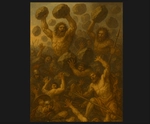
So he said, and the gods who give glory heard his words and approved. Their hearts desired war more than ever before, and on that day all readied for battle, men and women, the Titan gods and the children of Cronos as well as those defiantly strong beings Zeus brought back to the light from Erebus under the earth, each of them with a hundred arms coming out of their shoulders, and fifty heads growing from their shoulders on top of their giant limbs. They took their places against the Titans wielding enormous stones in their large hands.
But the Titans quickly reinforced their battle lines, and both sides readied their mighty hands.
The endless seas echoed around them, the great earth rumbled, the heavens groaned, and high Olympus shook from the ground up as the immortals charged, and the rumble and cries reached all the way to deep Tartarus.
So it was that the two sides hurled their terrible spears at each other, their encouraging shouts reaching the starry skies as the two sides converged.
Zeus unleashed the full fury of his heart and the full force of his might.
From both the sky and from Olympus, he hurled a constant barrage of lightning bolts, and the bolts, like a twisting fire, flew closely-packed out of his gigantic hands along with the flash and thunder.
All over, the life-giving earth burned black, a loud crackling filled the vast forests, and the earth and the streams of Oceanus and the seas all boiled.
The hot flames encircled the earth-born Titans and reached the heavenly aether, and for all their power, their eyes were blinded by the flashing light of the bolts.
Divine heat took hold of Chaos that looked to the eyes and sounded to the ears like Gaia and Ouranos making love: the great sound that rose up when he pressed down upon her from on high, the sound of gods converging in passion.
And the wind stirred a torrent of dust that mixed with the thunder-bolts and lightning—the weapons of great Zeus—and these carried the cries and shouts into the center between the two sides, and a terrifying noise of battle rose up, and mighty deeds were revealed.
Then the battle turned. Earlier, they had converged on each other and fought steadily, but then Cottus, Briareus, and battle-crazed Gyges rose up from the front lines and hurled three hundred boulders from their massive hands, one after another, and overwhelmed the Titans with their blows, defeating them and sending them down beneath the earth and binding them there.
As far below the earth as the sky is above the earth—that is the drop from earth to murky Tartarus.

A bronze anvil falling from the sky for nine days and nights would reach the earth on the tenth day, and the same anvil falling from the earth for nine days and nights would reach Tartarus on the tenth.
A bronze barrier surrounds Tartarus, and night is poured around its neck in three rows; and above it grow the roots of the earth and the sterile sea.
This is the murky netherworld where the Titan gods were hidden by design of cloud-gatherer Zeus: an vile place at the very ends of the wide earth.
There is no escape, for Poseidon placed a bronze gate around it, and a wall surrounds it on all sides.
This is where Gyges, Cottus, and great-hearted Briareus live, the guards of aegis-bearing Zeus.
And this is the source and limits of the dark earth, murky Tartarus, the barren sea, the starry heavens—dank, a terrible place that even the gods abhor: a great chasm.
Those who come inside the gates could never reach the chasm’s end even in a full year, for they would be blown this way and that by one storm after another, monstrous even for the immortal gods.
And it is here where the palaces of Nyx can be found, shrouded in black clouds.
It is here where Atlas, son of Iapetus, stands immobile, holding the wide heavens with his head and sturdy hands, and Nyx and Hemera cross paths and greet each other as they pass the great bronze threshold, one going out the door and the other coming in, for both cannot be in the house at the same time, for one leaves the house to pass around the earth while the other remains in the house waiting for her journey to begin.
Hemera carries light for the earth; the other holds in her hands Hypnos, brother of Thanatos—deadly Nyx, shrouded in clouds.
And here Nyx’s children have their homes: Hypnos and Thanatos, feared gods.
Bright Helios never shines his light upon them when he rises in the sky or when he sets in the sky.
Hypnos travels gently over the earth and wide seas soothing human beings, but Thanatos has an iron heart and brazen soul, and when he takes hold of a human, he does not let go.
He is hated even by the immortal gods.
And here stand the echoing palaces of the god of the underworld, stout Hades and terrible Persephone.
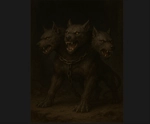
A fearsome dog (Cerberus) ruthlessly guards the gates using a nasty trick: he wags his tail and ears at those going in, but watches them carefully and does not let them leave, devouring those trying to go out the gates of stout Hades and terrible Persephone.
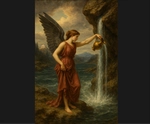
And here lives a goddess loathed by immortals, terrible Styx, oldest daughter of ebbing Oceanus; she lives aloof from other gods in a famous palace with a large rock roof and silver pillars on all sides that reach to the heavens.
Thauma’s daughter, swift-footed Iris, rarely travels under the broad back of the sea to deliver her messages.
When strife or quarrel stirs between the gods or when one with mansions on Olympus lies, Zeus will send Iris to bring back a golden jug filled with the great oath of the gods, the many named icy water that pours down from a high rock, flowing under the wide earth along the holy river, a branch of Oceanus, a tenth of which is given to Styx.
Nine parts flow all over the earth and the sea’s wide back in silver, whirling spools before falling into the sea, but one part flows from her rock, a great misery for the gods.
Immortals with homes on Olympus’ snowy peaks who swear false oaths after pouring Stygian waters will lie breathless for an entire year, taking no ambrosia or nectar as sustenance but lying spread out on a bed, breathless and speechless, enveloped in a foul coma.
When the punishment ends after a full year, the gods receive another, even worse, test: nine years of exile from other eternal gods, their councils and their feasts.
But in the tenth year, the gods can again mingle with others who have homes on Olympus.
This is the oath that the gods take with Styx’s primeval waters, which pour out from that rugged place.
And here are found the limits of the dark earth and of dark Tartarus and the barren sea and the starry skies, one after another—terrible places that even the gods abhor.
And here are the marble gates and unmovable bronze floor that is bound to the earth with self-grown roots, and here the Titans live, separated from all other gods, on the far edges of murky Chaos.
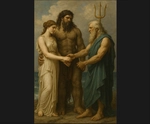
The famed allies of loud-thundering Zeus also live here, far below the floor of Oceanus, Cottus and Gyges, but Earth-shaker Poseidon made noble Briareus his son-in-law by giving him Cymopolea, his daughter, to marry.
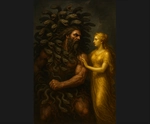
After Zeus drove the Titans from heaven, huge Gaia joined with Tartarus and bore her youngest child, Typhon, aided by golden Aphrodite.
His hands were strong and capable of great deeds, and his feet were tireless. A hundred snake heads sat on his shoulders, fearsome dragons with dark flickering tongues.
Fire sparkled from the eyes on each divine head, and with each look his eyes burned fire.
The voices in all the heads produced indescribable sounds. At times, they made sounds the gods could understand; at other times, they bellowed loudly like a giant bull with unbelievable strength or roared like a proud lion or cried like a litter of puppies, amazing to behold, or they hissed and made the tall mountains echo.
And terrible deeds would have happened on that day, and Typhon would have ruled over mortals and gods alike had Zeus, father of gods and mortals, not been watching.
He thundered loud and hard and the earth shook violently, as did the heavens above and the seas and the Oceanic streams and deep Tartarus.
As lord Zeus rushed ahead, all Olympus shook under his immortal feet, and the earth groaned.
Beneath them, the violet sea was consumed by the heat of the thunder and lightning and the monster’s flames and winds and blazing bolts.
And the earth, sea, and sky all boiled, and the force of the immortals sent great waves crashing over the sea shores, and an endless quake arose; and Hades, lord of the underworld, and the Titans in Tartarus around Cronos trembled in fear of the endless noise and terrible battle-strife.
When Zeus had raised his might and taken his weapons, thunder and lightning, he leapt from Olympus onto the terrifying monster and burnt all of his divine heads.
Once overpowered by striking blows, Typhon fell over lame, and the wide earth groaned; and as he was struck, flames flew from the thunderbolt lord in the dark, rocky mountain dells, and this awesome blast burnt much of the wide earth and melted it like tin that skilled young men heat in well-pierced melting pots or like iron, the strongest of things, tamed in the mountain dells by blazing fire and melted in the divine earth by skilled Hephaestus; so the fire melted in the earth.
And with rage in his heart, Zeus hurled Typhon into broad Tartarus.
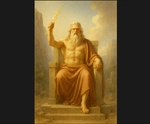
From Typhon comes the might of the moist-blowing winds, separate from Notus, Boreas, and clean Zephyrus, which are born of the gods and a profit for mortals.
The other winds blow rashly over the seas, bringing violent storms to murky waters and great woes to mortals.
They blow this way and that, scattering ships and killing sailors, and mortals who encounter them on the seas are helpless against them.
Even on the boundless, florid earth, they lay waste to the beautiful works of humans, filling them with dust and painful uproar.
When the blessed gods finished their work and settled by force their battle with the Titans over honor, then with Gaia’s counsel they urged far-seeing Zeus to become king and rule over all immortals, and he divided their honors among them.
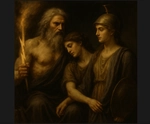
Zeus, king of the gods, took as his first wife Metis, who knows more than any other god or mortal.
But when she was about to give birth to gleaming-eyed goddess Athena, he deceived her with cunning words by putting Athena into his belly, taking the advice of Gaia and starry Ouranos.
They prophesied that one of the other immortal gods would hold the honors of king instead of Zeus, for Metis would one day bear very wise children: first she would bear gleaming-eyed Tritogeneia, who had strength and wisdom equal to her father, and then a son, a king of gods and mortals, with a violent heart.
But before this happened, Zeus put Athena in his own belly, so the goddess would advise him on good and evil.
- Eunomia = Lawfulness
- Dike = Justice
- Eirene = Peace
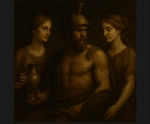
His second marriage was to shining Themis, who bore the Horae—Eunomia, Dike, and prosperous Eirene—who23 protect the works of mortals; and the Moirai—Clotho, Lachesis, and Atropos—to whom counselor Zeus gives the greatest honor, for they give mortal humans both good and evil.
Then Eurynome, beautiful daughter of Oceanus, bore for him the three fair-cheeked Charities: Aglaea, Euphrosyne, and charming Thalia; limb-relaxing desire falls from their eyes at every glance, for they are beautiful to behold under their brows.
Then bountiful Demeter came to his bed and bore white-armed Persephone, taken from her mother by Hades with the approval of counselor Zeus.
Then he fell in love with fair-haired Mnemosyne, ane she bore the nine Muses with golden bands, who delight in festivals and the joy of song.
Then aegis-bearing Zeus joined in love with Leto, and she bore Apollo and Artemis, shedder of arrows, loveliest of all Ouranos’ children.
Finally, Zeus made Hera his flourishing wife, and she joined in love with the king of gods and mortals and bore Hebe, Ares, and Eileithyia.
Zeus bore from his own head bright-eyed Athena, the revered rouser of terrible war and untiring leader who delights in the chaos of battle; this made Hera furious, so without mingling in love she bore famed Hephaestus, whose skilled hands surpassed all of Ouranos’ children.
And Amphitrite bore for the loud-roaring Earth-shaker great and mighty Triton, who holds the sea bottom and dwells in a golden palace with his dear mother and lordly father, a feared god.
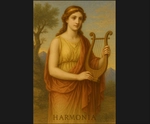
And Cytherea bore for shield-piercing Ares terrible Phobos and Deimos, who drive the battle lines of men into confusion with Ares, destroyer of cities, and Harmonia, who became wife of Cadmus.
And Zeus took Maia, daughter of Atlas, to bed, and she bore famed Hermes, herald of the gods.
Semele, daughter of Cadmus, joined with Zeus and bore delightful Dionysus, a mortal woman bearing an immortal son, but now both are gods.
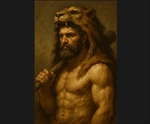
And Alcmene joined in love with cloud-gatherer Zeus and gave birth to the mighty Heracles.
And Hephaestus, famed for his twisted legs, took as wife Aglaea, youngest of the Charities.
And golden-haired Dionysus took as his wife blonde Ariadne, Minos’ daughter, and the son of Cronos made her immortal for his sake.
The strong son of fair-ankled Alcmene, mighty Hercules, took Hebe, daughter of great Zeus and golden-sandaled Hera, as his revered wife on snowy Olympus, after completing his painful tasks, for he now lives unharmed and ageless among the immortals for the rest of days.
And Perseis, famed daughter of Oceanus, bore Circe and King Aeëtes for untiring Helios.
Aeetes, son of light-bringing Helios, married the daughter of unending-river Oceanus, beautiful-cheeked Idyia, by will of the gods; and she, overcome by the passion of golden Aphrodite, gave birth to fair-cheeked Medea.
Now farewell to you with homes on Olympus, and the islands, mainlands, and salt seas within.
Now, sweet-voiced Olympian Muses, daughters of aegis-bearing Zeus, sing of the race of goddesses, those who lay in beds with immortals and mortals and who bore children equal to the gods.
The divine goddess Demeter mingled in love with heroic Iasius in a thrice-plowed field in Crete’s bountiful lands and bore noble Plutus,26 who travels all over the earth and the wide sea’s back; whoever happens upon him and comes into his arms is made rich, for he grants them great wealth.
Harmonia, golden Aphrodite’s daughter bore to Cadmus Ino, Semele, fair-cheeked Agave, and Autonoë, who married long-haired Aristaeus, and Polydorus, in fair-meadowed Thebes.
Callirhoe, daughter of Oceanus, mingled in Aphrodite’s love with stout-hearted Chrysaor, and bore the strongest of all mortals, Geryon, who was killed by mighty Hercules over his oxen with rolling feet in sea-girt Erytheia.
And Eos bore to Tithonus bronze-helmed Memnon, Ethiopian king, and lord Emathion.
But to Cephalus she bore a shining son, strong Phaethon, a god among mortals.
When he was a delicate child in the soft bloom of youth, laughter-loving Aphrodite snatched him up and made him the night guardian of her sacred temples, a divine spirit.
- Plutus is the god of wealth; his name is the origin of the word “plutocracy,” rule by the wealthy.
By the will of the immortal gods, Jason, Aeson’s son, took with him the daughter of Zeus-blessed King Aeëtes after completing the many grueling tasks imposed upon him by the arrogant king of violent mind, Pelias.
After enduring many hardships, he came to Iolcus in a swift ship with bright-eyed Medea, daughter of Aeëtes, and made her his blushing bride.
She mingled in love with Jason, shepherd of the people, and bore Medus, who was raised in the mountains by Chiron, son of Philyra. Thus the will of Zeus was fulfilled.
Of the daughters of Nereus, the Old Man of the Sea, divine Psamathe lay in love with Aeacus through golden Aphrodite and bore Phocus, while silver-footed Thetis joined with Peleus and bore lion-hearted Achilles, breaker of enemies.
And fair-crowned Cytherea bore Aeneas, joining in love with the hero Anchises on the peaks of windy Ida, rich in valleys.
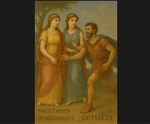
Circe, daughter of Helios, son of Hyperion, lay in love with stout-hearted Odysseus and bore Agrius and Latinus, noble and strong; and through golden Aphrodite she bore Telegonus as well. They ruled over the famed Tyrrhenians, far away in the holy islands.
Divine Calypso joined with Odysseus in love and bore Nausithous and Nausinous.
These are the goddesses who lay with mortal men and bore children equal to the gods.
Now, Olympian Muses, daughters of aegis-bearing Zeus, sing of the race of women.