The political reforms of ‘Lycurgus’
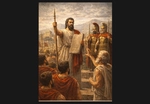
The political reforms promulgated by the legislator 'Lycurgus' proved vital to the ascendance of the Spartans to a position of power in the sixth century, owing to two principal factors: firstly, the resolution of their internal political discord served to eliminate the primary impetus for the political convulsions that engendered tyranny throughout the remainder of Hellas; secondly, the constitutional concord existing between the principal political entities within the state (namely, the kings, the Gerousia, and the 'damos') enabled the Spartans to channel their collective energies against other Hellenic cities, as well as to exert dominion over their Helots and Perioeci. In the words of Thucydides:
Thucydides 1.18.1:
For a period of approximately four hundred years, or slightly more, extending to the conclusion of this [i.e., Peloponnesian] war, the Lacedaimonians have maintained the same system of governance. Having accrued power by virtue of this stability, they have intervened in the affairs of other states.
The foundation for these political reforms lay in an archaic document known as the Great Rhetra, which is quoted in Plutarch's biographical account of Lycurgus, but which he almost certainly discovered preserved within Aristotle's now-lost treatise, 'The Constitution of the Spartans'.
A 'rhetra' constitutes the Spartan term for an enactment or decree, which, according to tradition, was not committed to writing, in contrast to the customary practice in fifth-century Athens. Nevertheless, the Great Rhetra held such profound political significance, particularly for the Spartan hoplites, that its provisions were, at some juncture, transcribed as a guarantee of their future observance and implementation:
Plutarch, Lycurgus 6:
Having established a cult dedicated to Syllanian Zeus and Athena, having performed the requisite 'tribing and obing', and having constituted a Gerousia comprising thirty members, inclusive of the kings, (1) season upon season, they are to convene Apellai between Babyka and Knakion; (2) the Gerousia is tasked with both the introduction of proposals and the maintenance of impartiality; (3) the damos [Doric Greek for 'demos'] is to be invested with the power to [in Plutarch's gloss upon a severely garbled Doric phrase] 'render a decisive verdict'; … (4) however, should the damos proffer a distorted pronouncement, the Gerousia and the kings shall serve as the removers.
Regrettably, the precise meaning and significance of these constitutional provisions, the dating of the document, and the historical context prevailing at the time of its introduction are subjects of considerable contention amongst contemporary scholars. Notwithstanding, the Great Rhetra, albeit in its most simplified form, delineated the powers and the inter-relationship between three of the four principal institutions of state (vide infra for the constitutional powers of the 'Ephors').