The Sparta polis Prerecuisites
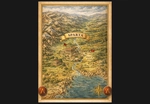
About the year 1000 B.C., the Dorians did arrive in the Peloponnese, and they did justify their conquests upon the grounds that they were the descendants of Heracles, and were legitimately reclaiming their former lands. The Spartan Dorians did settle in the valley of the Eurotas River, situated in Laconia (also known as Lacedaimon) in the southern Peloponnese, in four villages ('obai') likely; the fifth village ('oba') of Amyclai, which was some five kilometres further south and became an integral part of the city of Sparta, was added at a later time. The Spartans then did set about establishing their control throughout Laconia (and possibly south-east Messenia) by conquering the other Dorian-controlled communities, whose inhabitants came to be known, according to their status, as either the Perioeci ('those who live around') or Helots. The name Helot may have derived from 'the inhabitants of Helos', which was a village near the head of the Laconian Gulf, or (more likely) from the Greek word for 'those captured (in war)'.
The Perioeci were citizens in their own communities, and, for the most part, possessed autonomy in the conduct of their internal affairs; but their foreign policy was controlled by the Spartans, and they were obligated to supply troops for Spartan campaigns. However, they did hold a privileged position constitutionally, as the Spartans did call themselves officially 'the Lacedaimonians' (the inhabitants of Lacedaimon) and thus they considered the Perioeci communities to be part of the Spartan state, at any rate for military purposes. After the introduction of the policy which forbade the Spartans from participating in manual trades, the Perioeci became a crucial element in the maintenance of the Spartan system by supplying the necessary economic needs of the state in the form of manufacture, trade and other service industries. The Helots were the other group of inferiors, lower than the Perioeci in status and in political rights (if any), although it is difficult to know in what ways and to what degree, as later writers make no distinction between these and the Messenian Helots.
By the middle of the eighth century (750), there was little to distinguish the Spartans in their political development from the other main Greek city-states: a landed aristocracy exercising power through a council. The chief diffference was the continued existence of kingship, which in other states had been removed totally or had evolved into an appointed public office, and the fact that there were two kings. The Spartans also, in common with the rest of Greece, experienced the problems of over-population and of the consequent land-hunger. However, the Spartan solution – conquest in Messenia rather than overseas colonisation (apart from Taras in southern Italy) – was the key factor in creating the Spartan state that was uniquely diffferent from the other Classical Greek states of the fifth century.