The kings of Sparta, Prerequisites
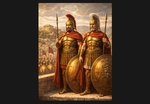
There existed two hereditary kings, issuing from the houses of the Agiads and the Eurypontids, and, albeit the former were traditionally deemed senior (Herodotus 6.51), they were constitutionally equal in authority, thereby serving as a check upon each other’s power. By the stipulations of the Great Rhetra, their constitutional power was diminished by their inclusion, sans special privileges, amongst the thirty-strong aristocratic Gerousia. This is further corroborated by Herodotus, who enumerates, apart from their social privileges, their priesthoods and their limited judicial authority (i.e. over unmarried heiresses, adoption, and public roads) as their sole spheres of authority in domestic affairs (6.57). Aristotle restricted their constitutional import to the leadership of the army on campaign:
Aristotle, Politics 1285a 5–10
when he goes on a foreign expedition, he is the leader in all matters that concern the war …; therefore this kingship is a kind of generalship which possesses full powers and is for life.
Aristotle was indubitably correct in his emphasis on the supreme authority of the kings on campaign, yet he did not fully appreciate their dominant influence as political leaders, particularly when the kings were men of high calibre. Although their constitutional powers at home were strictly limited, the outstanding prestige that was gained from leading the Spartan army (and, subsequently, the Peloponnesian allies) would greatly enhance the political standing and influence of the kings amongst the Spartan hoplites. In a society so devoted to, and so respectful of, military prowess, a Spartan king with a laudable record of success in war would garner great glory and would be the focal point of the hoplites’ admiration. Their influence was especially prevalent in foreign initiatives, particularly if the prospect of a military expedition loomed, since the king himself would be the commander-in-chief. The dynamic career of Cleomenes I (c.520–490) is amply documented by Herodotus, who assigns to him the leading, even at times the exclusive, role in the conduct of all but one of Sparta’s foreign affairs. There exists but one instance, toward the close of the fourth century, when the Spartans adopted a policy in foreign affairs that was opposed by a powerful king: the rejection of King Archidamus’ counsel in 432 to postpone the declaration of war against Athens.
According to Herodotus, the Spartan kings even possessed the constitutional right to declare war:
Herodotus 6.56:
The Spartans have given to the kings these rights: [certain priesthoods] and to wage war against any land that they wished, and any Spartan who opposes this is liable to be put under a curse.
Doubt has been cast upon this statement, as the evidence of the fifth and fourth centuries reveals that this power was vested in the Spartan Ecclesia (Assembly). However, it is possible that the kings did originally possess this right in theory, when they acted in concert and went on campaign together. The constitutional position may well have altered after c.506 when the clash between Cleomenes and Damaratus led to the abandonment of the invasion of Athens (vide infra); from then on, it was no longer permissible for two kings to campaign together, and thus it would become virtually impossible for them to exercise this shared right. Eventually, the right became obsolete through want of use.