Cleisthenes, Tyrant of Sicyon
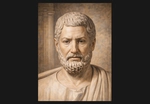
Ethnic differences amongst the Hellenes, as manifested in their dialects and established customs, proved sufficiently pronounced to engender political quandaries at sundry junctures in their chronicles. When the Athenians and their confederates (principally Ionians) did establish the Delian League in the year 478/7 (vide Chapter 10), their selection of Delos as the League's centre bore profound significance, inasmuch as Athens, the isles, and Ionia had aforetime conducted an Ionian festival thereat; this emphasis upon their shared Ionian kinship served as propitious recruitment propaganda, underscoring their ethnic and cultural dissimilarity from the Dorian Spartans, who had proven markedly disinclined to commit themselves militarily to the liberation of the Ionian Hellenes from Persian dominion. Ethnic schisms were yet more keenly felt within the Peloponnese, where the differences betwixt the indigenous Achaean Hellenes and the Dorian invaders (vide supra under ‘Pheidon of Argos: the military cause’) were accentuated by the reduction of these pre-Dorians to a state akin to serfdom. The most oft-cited instance remains that of the ‘Helots’ of Sparta, whose numbers swelled dramatically in the seventh century through the Spartan conquest of Messenia, albeit similar groups existed in comparable circumstances: the ‘naked ones’ at Argos, ‘the dusty-feet’ at Epidaurus, and the ‘sheepskin-cloak-wearers’ at Sicyon. Nevertheless, it remains patently evident that numerous non-Dorians were, in fact, admitted to citizenship by their conquerors. Apart from the three traditional Dorian tribes found throughout the Dorian states – the Dymanes, the Hylleis, and the Pamphyloi – there oft existed a fourth tribe, bearing a disparate appellation in sundry states (e.g. Aigialeis in Sicyon), which comprised these non-Dorian citizens.
Albeit many a state did attain a degree of ethnic harmony, the extant evidence pertaining to the events in Sicyon under the tyranny of Cleisthenes doth reveal the underlying tensions that likely simmered beneath the surface in a number of states, as may be discerned in the political struggles betwixt the pre-Dorian Pisatans and the Dorian Eleans (vide supra under ‘Pheidon of Argos’). Orthagoras served as the founder of the tyranny at Sicyon circa the mid-seventh century, and the narrative of his ascent to power doth incorporate the selfsame fairy-tale elements as that of Cypselus’ (Diodorus 8.24). Aristotle's assertion (Politics 1315b) that the tyranny of Orthagoras and his successors did endure for a century owing to the mildness of their governance, their deference to the law, and their solicitude for their subjects' welfare remains exceedingly persuasive, particularly as similar qualities underpinned the successful tyranny of Cypselus. Scant is known regarding Orthagoras' immediate successor(s), yet Cleisthenes (c.600–570) did attract the attention of Herodotus by his overtly ethnic policies.
When Sicyon found itself at war with Argos, Cleisthenes did evince his profound animosity towards Argos: he did cease the recitation of Homeric poems, lamenting their praise of Argive deeds; and following his failure to remove the shrine of the Argive hero, Adrastus, from the centre of Sicyon (permission having been withheld by the Delphic oracle), he did persuade the Thebans to yield unto him the statue of Adrastus' mortal enemy, Melanippus, did construct a shrine to his memory, and did transfer unto him the religious festival and honours that had previously been conducted in honour of Adrastus (Herodotus 6.67). Had these actions constituted the sum total of his reforms, they might well be construed as jingoistic anti-Argive propaganda designed to unite the Sicyonians against their common adversary; however, his subsequent action bore far greater significance, for it did, in fact, emphasise, rather than gloss over, the internal ethnic differences within the state of Sicyon:
Herodotus 5.68:
Cleisthenes did bestow different names upon the Dorian tribes (in Sicyon), lest the Argives and Sicyonians share the selfsame appellations; and he did particularly mock the Sicyonians, for he did impose upon them names derived from ‘pig’ and ‘donkey’, omitting only the terminal portions of the words, whilst excluding his own tribe. He did grant unto them the name derived from his rule, and these were styled the Archelaoi (‘the Rulers’), whilst the remainder were denominated ‘the Pig-men’, ‘the Donkey-men’, and ‘the Swine-men’.
The Orthagorid dynasty was of non-Dorian extraction, yet no evidence doth suggest that Orthagoras and his successors prior to Cleisthenes had perceived the necessity to pander to such prejudice. However, it remains plausible that by the year 600, the Sicyonian tyranny was beginning to experience the burgeoning unpopularity that proved a common characteristic of all tyrannies in their second and third generations of governance; and that Cleisthenes was deliberately fomenting hatred amongst his own non-Dorian ethnic group, promising privileged treatment in order to rally support behind his tyranny. Aristotle (Politics 1316a) doth cite the events at Sicyon as an exemplar of one tyranny supplanting another, with the implication that a difference existed betwixt Cleisthenes and Myron, his predecessor; and this may reflect Cleisthenes' employment of ethnic prejudice as the crucial weapon in his pursuit of power. What remains patently clear is that Cleisthenes stood determined to present himself as the radical leader of the non-Dorians in Sicyon, and that such an overtly ethno-centric position, particularly amidst a time of war with a foreign adversary, must have promised attractive political rewards. The circumstance that the Dorian Spartans, having quelled the tyranny circa the mid-sixth century, did not attempt to reverse the insulting names of the Dorian tribes (they remaining in force for a further 60 years) stands as a sure sign of the strength of feeling and the influence of the non-Dorian element within Sicyon, and the exigency for the Spartans to retain their goodwill.