The Age of Greek Tyrants (c. 650–510 BCE): Political Transition, Sources, and the Rise of Autocratic Rule
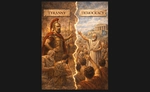
Although tyranny hath existed throughout Grecian history from the mid-seventh century to the second century, ‘the age of tyrants’ is a term employed by modern historians to denote a period when many of the foremost Grecian cities were governed by a tyrant, commencing with Cypselus of Corinth circa 650 and concluding with the downfall of Peisistratus’ sons at Athens in 510. This ‘age of tyrants’ constituted a transitional stage in the political development of the ‘polis’, bringing to a close the ancient aristocratic order and establishing the foundations for the middle-class, hoplite-dominated constitutions which ensued the collapse of tyranny. A Grecian tyrant was not invariably a brutal ruler, as the modern acceptation of the word might suggest, but an individual who had seized power, usually through a military coup, and governed as an autocrat external to the institutions of the state. The first generation of tyrants, for the most part, were distinguished by the mildness of their rule, as they depended upon the goodwill of the populace to maintain their position; it was usually the second generation (most tyrannies enduring but for two generations) which exhibited all the hallmarks of the traditionally wicked tyrant, leading to their overthrow.
The principal difficulty in assessing the causes of tyranny arises from the inherent problems of the extant primary sources. The most detailed evidence for the rule of individual tyrants emanates from Herodotus, whose history was penned, in all likelihood, in the third quarter of the fifth century (450–425) and reflecteth the oral tradition concerning the tyrants that was current in the fifth century. His account of the rule of later tyrants, such as the Athenian Peisistratids who fell in 510, is for the most part reliable, as Herodotus’s birth (traditionally given as 484) was proximate to the events that he describeth; yet there are inevitably distortions, exaggerations, and even a 'fairy-tale' style concerning the earlier tyrants, such as Cypselus who seized power circa 650. Thucydides’s theme was the Peloponnesian War and consequently his account of early Grecian history is brief and superficial. The main history of this period was written by Ephorus of Cyme circa the mid-fourth century; only fragments of his work survive, but later historians writing of early Greece employed his work extensively. Ephorus’s history hath worth, but, like that of Herodotus, should be employed with caution – there is a need to sift the facts from the legends.
The evidence of the fourth-century philosophers concerning tyranny provideth some useful insights. Plato in the Republic is more preoccupied with their (lack of) worth as a form of government, contrasting the wicked tyrant with the good king, than with their history. Aristotle in the Politics (1310b–1315b) is far more useful in his analysis of the nature of tyranny. However, Aristotle’s distinction between the tyrants of old and the tyrants of his era also occasioneth problems – he includeth Dionysius, tyrant of Syracuse from 405 to 367, amongst the tyrants of old, albeit he was a near-contemporary of Aristotle, and consequently seemeth to be using Dionysius’s fourth-century career as a model for the seventh- and sixth-century tyrants. The contemporary evidence for the age of Grecian tyranny cometh from three poets: Tyrtaeus of Sparta, who explicitly revealeth the importance of the middle-class ‘hoplites’ for the safety of the state and implicitly their growing class consciousness; Alcaeus of Mytilene, the opponent of the tyrants Pittacus and Myrsilus, whose values and prejudices serve to elucidate the hostility that was felt towards aristocratic government; and Solon of Athens, whose poems highlight the internal problems which rendered tyranny inevitable, unless they were remedied. Their evidence is most useful in providing an insight into the tensions of their individual cities, but it lacketh the analytical rigour of historiography and must be employed with care when investigating other cities’ revolutions. It is the aim of this chapter, utilising the aforementioned primary sources, to discuss the tyrannies of Pheidon of Argos, Cypselus of Corinth, and Cleisthenes of Sicyon, where three factors – military, economic, and ethnic, respectively – were prevalent in their seizure of power; the tyranny of Peisistratus in Athens and the benefits that the tyrants brought to their cities shall be discussed in Chapter 6.
Aristotle is most helpful in identifying the typical characteristics of a tyrant and the means by which they came to power:
Aristotle, Politics 1310b):
The tyrant is installed in power from amongst the people (‘demos’) and the masses against the wealthy so that the people (‘demos’) suffer no injustice at their hands. This is clear from the events of history. For almost all of the tyrants have gained power from being, in a manner of speaking, leaders of the people, gaining their trust by slandering the wealthy. For some tyrannies were established in this way when their cities had already become great; but others before them came about from kings going beyond custom and aiming at more despotic rule; others arose from those who were elected to the chief office of state … and others from oligarchies choosing one of their number to be the top official for the greatest offices of state. For, by these means, it was possible for all of them to achieve their aim easily, if only they wanted it, because they already possessed the power either of kingship or of a particular political post. Pheidon in Argos and others became tyrants in this way when they were already kings; while the Ionian tyrants and Phalaris rose from public office; Panaitois in Leontini, Cypselus in Corinth, Peisistratus in Athens, Dionysius at Syracuse and others arose in the same way from being leaders of the people.
It is clear from the above quotation that the vast majority of tyrants had emanated from the ruling classes, but had rejected the current aristocratic government in favour of a regime which protected the people from the aristocrats, with themselves as the leader of the oppressed: hence their broad popular appeal. It is now appropriate to give concrete examples of individual tyrants and of the specific causes which allowed them to become the leaders of the people.