The Kingdom of Judah: Origins, Archaeology, Kingship, and Measurement Systems
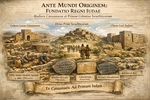
Before the World Was Born, or the Establishment of the Judah Kingdom
Introduction to the period, first settlements, regional cultural mapping
In the commencement was the Word, and the Word was with God, and the Word was God. He was with God in the commencement. Through Him all things were wrought; without Him naught was wrought that has been wrought. In Him was life, and that life was the light of all mankind.
In scientifical terms, as we apprehend, any civilisation is invariably human-centric. Logically, humanity stands as the modifying factor of everything surrounding us that originates in nature—without so much as mentioning all that possesses an artificial nature as well.
Thus, to apprehend the origins of social structures, we must delve into the evidence from just prior to such structures beginning to reveal themselves. This approach is applicable to the famed Kingdom of Judah’s pre-establishment period, which we shall reconstruct herein.
Prior to the establishment of the Kingdom of Judah, the region was inhabited by divers Canaanite tribes. Archaeological findings intimate that these Canaanite communities practiced urbanisation, agriculture, and trade. For instance, the site of Tel Dan, situate in the northern part of ancient Israel, has yielded evidence of Canaanite occupation, including city gates and fortifications dating back to the Middle Bronze Age (c. 2000–1550 BCE). These developments laid the groundwork for the emergence of Israelite culture in the region.
By the Late Bronze Age (c. 1550–1200 BCE), the Canaanite city-states began to decline, perchance due to invasions and internal upheavals. This period witnessed the gradual infiltration and settlement of groups identified as Israelites. Archaeological evidence from sites such as Khirbet Qeiyafa and Khirbet al-Ra'i suggests that these early Israelite settlements were characterized by fortified structures and distinct pottery styles, indicating a move toward centralized organisation and state formation.
- As evidence of the early stage of this period, let us consider three main sites, carefully and thoroughly examined up to the present time.
🌇 Khirbet Qeiyafa
- Situate in the Elah Valley, Khirbet Qeiyafa is one of the most significant archaeological sites associated with early Judah. Excavations have uncovered a fortified city with casemate walls, a city gate, and a large public building, all dating to the early 10th century BCE. The site's strategic location and architectural features suggest it served as a military outpost or administrative centre during the reign of King David.
🌇 Khirbet al-Ra'i
- Situate near Khirbet Qeiyafa, Khirbet al-Ra'i provides additional insights into early Judahite society. Artefacts from this site include pottery and inscriptions that align with the material culture of the period, supporting the notion of a developing Judahite identity distinct from neighbouring cultures.
🌇 Lachish
- The site of Lachish, mentioned in biblical texts, has yielded evidence of fortifications and administrative structures dating to the late 10th century BCE. These findings corroborate the biblical account of King Rehoboam's fortification efforts and the expansion of Judah's territory during this period.
But to be crystal fair, we should note, that the Tel Dan Stele, an Aramaic inscription dating to the 9th century BCE, contains the phrase 'House of David' providing the earliest known extrabiblical reference to King David. Such inscriptions are crucial for understanding the historical context and confirming the existence of key figures mentioned in biblical narratives.
The Settlements And Structure Of Early Israelites
Early Israelite society was primarily agrarian and organised around extended family units. Archaeological evidence indicates that Israelites lived in nuclear households, often clustered in small villages. These homes were typically constructed with mudbrick and stone, featuring multiple rooms and sometimes a second story. The layout often included a courtyard for domestic animals, reflecting a subsistence economy based on agriculture and pastoralism. Villages were situate in the central hill country, an area less influenced by neighbouring urban centres, which contributed to the development of a distinct Israelite identity.
During the period of the Biblical Judges, Israelite society lacked a centralised monarchy and was instead organised into tribes led by judges. These leaders were often charismatic figures who arose in times of crisis to deliver the Israelites from oppression. Over time, the desire for a centralised leadership led to the establishment of the monarchy, beginning with King Saul. The king's role was to unify the tribes, lead military campaigns, and establish a centralised administration.
Did they possess a communal measurement system at this period? Indeed, they did. We shall trace the origins of that system later; for now, let us continue describing the socio-cultural background. In the next section, devoted to their written tradition, we shall begin to follow the object of our primary interest.
Speculations Of The Hebrew Language Origin, But Not Only Speculations...
First of all, let us glance at the evidence that brings context to the discussion:
- Khirbet Qeiyafa Ostracon (c. 10th century BCE): A pottery shard inscribed with five lines of text, possibly reflecting an early form of the Hebrew language. Its exact linguistic classification remains debated.
- Gezer Calendar (c. 10th century BCE): A limestone tablet listing agricultural activities, providing insights into the seasonal life of the Israelites.
- Tel Zayit Abecedary (c. 10th century BCE): A limestone boulder inscribed with a complete Phoenician alphabet, marking a significant stage in the development of alphabetic writing.
- Siloam Inscription (c. 8th century BCE): A Hebrew inscription found in the Siloam Tunnel in Jerusalem, commemorating the tunnel’s construction during King Hezekiah’s reign.
- Ketef Hinnom Scrolls (c. 7th century BCE): Silver amulets inscribed with portions of the Priestly Blessing, among the oldest known biblical texts.
The artefacts listed above shew that the development of Hebrew writing evolved from the Phoenician script—a derivative of the Proto-Canaanite alphabet.
The origins of the Hebrews are complex and multifaceted, with several theories regarding their emergence:
- Indigenous Development: Some scholars propose that the Hebrews were native to the central hill country of Canaan, gradually forming a distinct identity through cultural and religious practices.
- Canaanite Continuity: Genetic studies indicate that modern Jewish and Arab populations of the region share significant ancestry with ancient Canaanites, suggesting continuity and assimilation over time.
- Exodus Tradition: The biblical account of the Exodus describes the Hebrews’ migration from Egypt to Canaan. Whilst archaeological evidence for this event remains limited, it continues to hold central importance in Hebrew identity and history.
❗ Metrology and measurement systems have always advanced alongside writing systems. Here, it is important to emphasise that the Israelites employed a numerical structure based on the decimal system, similar to other ancient Near Eastern cultures. This system was used in various aspects of daily life, including trade, agriculture, and religious observance. Inscriptions from the period, such as those found at Tel Arad, indicate that the Israelites possessed a sophisticated understanding of time and numerical organisation, as evidenced by references to months and days in their records.
The Sovereigns of the Kingdom of Israel — The House of David (Formally)

A concise account of the Crown's representatives, presented in a chronological conspectus of the kings of the Kingdom of Judah, from its establishment in the tenth century before the Common Era until the Babylonian conquest in 586 before the Common Era. This timeline doth include the duration of each king's dominion, their character as depicted in biblical narratives, and the notable events that did transpire during their rule.
1.👑 Rehoboam (c. 931–913 BCE):
- Dominion: 17 years, Character: Generally considered a 'bad' king, Notable Events: His harsh policies did lead to the division of the united monarchy; the northern tribes did rebel, forming the Kingdom of Israel
2.👑 Abijah (Abijam) (c. 913–911 BCE):
- Dominion: 3 years, Character: Labelled as a 'bad' king, Notable Events: Engaged in a battle against Jeroboam of Israel; his reign was marked by continued conflict with the northern kingdom.
3.👑 Asa (c. 911–870 BCE)
- Dominion: 41 years, Character: Regarded as a 'good' king, Notable Events: Instituted religious reforms, removed idols, and sought alliances to strengthen Judah
4.👑 Jehoshaphat (c. 870–848 BCE):
- Dominion: 25 years, Character: Considered a 'good' king, Notable Events: Strengthened Judah's defences, promoted religious education, and formed alliances with Israel
5.👑 Jehoram (c. 848–841 BCE):
- Dominion: 8 years, Character: Viewed as a 'bad' king, Notable Events: Married Athaliah, daughter of Ahab of Israel; his reign was marked by internal strife and external threats
6.👑 Ahaziah (c. 841 BCE):
- Dominion: 1 year, Character: Considered a 'bad' king, Notable Events: Aligned with Israel's King Jehoram; slain by Jehu during Jehu's coup in Israel
7.👑 Athaliah (Queen) (c. 841–835 BCE):
- Dominion: 6 years, Character: Oft labelled as a 'bad' ruler, Notable Events: Usurped the throne after the death of her son Ahaziah; her reign did end when she was overthrown by Jehoiada the priest
8.👑 Joash (Jehoash) (c. 835–796 BCE):
- Dominion: 40 years, Character: Initially a 'good' king, Notable Events: Restored the Temple; later turned to idolatry, leading to his assassination by his officials
9.👑 Amaziah (c. 796–767 BCE):
- Dominion: 29 years, Character: Mixed; 'good' early, but later actions did lead to his downfall, Notable Events: Defeated Edom; later turned to idolatry, leading to his assassination
10.👑 Uzziah (Azariah) (c. 792–740 BCE):
- Dominion: 52 years, Character: Generally regarded as a 'good' king, Notable Events: Expanded Judah's territory; his later years were marked by pride and punishment
11.👑 Jotham (c. 750–735 BCE):
- Dominion: 16 years, Character: Considered a 'good' king, Notable Events: Strengthened Judah's defences; his reign was overshadowed by his father's (Uzziah's) earlier actions
12.👑 Ahaz (c. 735–715 BCE):
- Dominion: 20 years, Character: Labelled as a 'bad' king, Notable Events: Introduced idolatry; sought Assyrian assistance, leading to Judah becoming a vassal state
13.👑 Hezekiah (c. 715–686 BCE):
- Dominion: 29 years, Character: Regarded as a 'good' king, Notable Events: Instituted religious reforms; successfully resisted Assyrian siege of Jerusalem
14.👑 Manasseh (c. 687–642 BCE):
- Dominion: 55 years, Character: Initially a 'bad' king; later repented, Notable Events: Reversed his father's reforms; later sought repentance and attempted reforms
15.👑 Amon (c. 642–640 BCE):
- Dominion: 2 years, Character: Considered a 'bad' king, Notable Events: Continued idolatry; assassinated by his own servants
16.👑 Josiah (c. 640–609 BCE):
- Dominion: 31 years, Character: Regarded as a 'good' king, Notable Events: Instituted major religious reforms; slain in battle against Pharaoh Necho II
17.👑 Jehoahaz (Shallum) (c. 609 BCE):
- Dominion: 3 months, , Character: Labelled as a 'bad' king, Notable Events: Deposed by Pharaoh Necho II; taken to Egypt
18.👑 Jehoiakim (c. 609–598 BCE):
- Dominion: 11 years, Character: Considered a 'bad' king, Notable Events: Initially a vassal of Egypt; later submitted to Babylon; faced internal unrest
19.👑 Jehoiachin (Jeconiah) (c. 598–597 BCE):
- Dominion: 3 months, Character: Viewed as a 'bad' king, Notable Events: Deported to Babylon during Nebuchadnezzar's siege
20.👑 Zedekiah (c. 597–586 BCE):
- Dominion: 11 years, Character: Considered a 'bad' king, Notable Events: Rebelled against Babylon; Jerusalem was besieged and destroyed; he was captured and taken to Babylon
And here we may finalize the story of the Israelite Crown, but…
The Restoration of the Reign over the Kingdom of Israel
- Post-Zedekiah: Babylonian Exile & Persian Period
- - 586–538 BCE: Judah ceased to exist as a kingdom. The region became a Babylonian province, and much of the elite population was exiled (Babylonian Captivity).
- - 538 BCE: King Cyrus the Great of Persia conquered Babylon and allowed the exiles to return. This is the start of the Second Temple period.
- - No native monarchy: Upon return, Judah did not re-establish a Davidic king. Instead, governance was handled by: Persian-appointed governors (e.g., Zerubbabel as governor). High priests (religious and partial civil authority). Native elites: The returned Judahites (Zerubbabel, Joshua the High Priest, and others) formed the ruling local elite under Persian oversight. This system continued under Hellenistic rule and later under Roman client administration.
- Later history flow gradually shewing us the decaying of social structures, and as a result, unevoidble falure of the state as is:
- Roman Period (63 BCE onwards)
- - Client kings: Rome reintroduced local kings, but these were Roman-appointed representatives, not fully sovereign rulers: Hasmonean dynasty became a client kingdom initially.
- - Herod the Great (37–4 BCE) ruled as a Roman-appointed king. Herod’s successors ruled divided client territories.
- - No restoration of full Davidic sovereignty: The monarchy under Rome was essentially symbolic and administrative, with real power held by Rome.
The Ascertainment of Mensuration Units and Their Historical Significance in the Kingdom of Judah

📏 Units of Length and Distance
- - Cubit (Amah):
- Archaeological Attestation: The Siloam Inscription, chronologically assigned to the 8th century Before the Common Era, makes cognisance of a length of 1,200 cubits appertaining to Hezekiah's subterranean passage. The passage's veritable length approximates 547 metres, ergo intimating a cubit length of approximately 45.75 cm.
- - Handbreadth (Tefach) and Finger (Etzba):
- Archaeological Attestation: Whilst direct archaeological corroboration for these units remains circumscribed, their employment is inferred ex biblical texts. Ergo, the dimensions of the Tabernacle and its accoutrements in Exodus are delineated utilising these units.
⚖️ Units of Weight
- - Shekel:
- Archaeological Attestation: A stone weight bearing the inscription 'beka' was unearthed proximate to the Western Wall in Jerusalem. This weight finds association with the biblical half-shekel tax.
- - Mina:
- Archaeological Attestation: The weight system in ancient Judah evinced influence from the Babylonian system, wherein the mina constituted a standard unit. Archaeological discoveries, such as weights and inscriptions, intimate the utilisation of the mina in commerce and temple oblations.
- - Talent:
- Archaeological Attestation: The talent, a substantial unit of weight, finds mention in the construction of the Tabernacle in Exodus 38:24. Archaeological ascertainments, encompassing inscriptions and weights, substantiate its employment in transactions and offerings of considerable magnitude.
🧊 Units of Volume:
- - Ephah and Bath:
- Archaeological Attestation: Inscriptions originating from sites such as Tell Qasileh and divers Judahite locales have been discovered, bearing markings indicative of the ephah and bath. These units served in the mensuration of both grain and liquids, respectively.
- - Seah, Hin, Omer:
- Archaeological Attestation: These lesser units of volume are referenced in biblical texts and are presumed to have seen application in quotidian life for the mensuration of grain and liquids. Direct archaeological substantiation remains circumscribed but finds support in textual references.
| Unit | Archaeological Attestation | Estimated Length | Modern Equivalent |
|---|---|---|---|
| Cubit (Amah) | Siloam Tunnel inscription (~8th c. BCE), Judahite building remains | ~0.457 m | 1 cubit ≈ 0.457 m |
| Handbreadth (Tefach) | Inferred ex cubit (Tabernacle dimensions) | ~0.114 m | 1 handbreadth ≈ 0.114 m |
| Finger (Etzba) | Inferred ex handbreadth | ~0.019 m | 1 finger ≈ 1/6 handbreadth ≈ 0.019 m |
| Mile (Mil) | Persian-influenced units, employed in late Judahite period | ~1,609 m | 1 biblical mile ≈ 1.609 km |
| Unit | Archaeological Attestation | Estimated Weight | Modern Equivalent |
|---|---|---|---|
| Gerah | Stone weight unearthed in Jerusalem | ~0.57 g | 1 gerah ≈ 0.57 g |
| Shekel | Temple tax weights, First Temple period | ~11.4 g | 1 shekel ≈ 11.4 g |
| Bekah | Half-shekel stone weight | ~5.7 g | 1 bekah ≈ 5.7 g |
| Mina (Maneh) | Babylonian-influenced weights, inscriptions | ~574 g | 1 mina ≈ 574 g |
| Talent (Kikkar) | Large temple/treasury weights | ~34.4 kg | 1 talent ≈ 34.4 kg |
| Unit | Archaeological Attestation | Estimated Volume | Modern Equivalent |
|---|---|---|---|
| Log | Temple jars, ritual measurements | ~0.3 L | 1 log ≈ 0.3 L |
| Hin | Inscriptions at Judahite sites | ~3.7 L | 1 hin ≈ 3.7 L |
| Bath | Temple vessels (Solomon’s Temple) | ~22 L | 1 bath ≈ 22 L |
| Seah | Inferred ex ephah | ~7.3 L | 1 seah ≈ 7.3 L |
| Ephah | Storage jars, grain measurements | ~22 L | 1 ephah ≈ 22 L |
| Omer | Manna portion, pottery inscriptions | ~2.3 L | 1 omer ≈ 2.3 L |
Sources are founded upon archaeological discoveries: Siloam Tunnel measurements, First Temple–period weights, storage jars, and inscriptions from Jerusalem, Lachish, Tel Arad, and cognate Judahite sites. These measurements represent averages, inasmuch as exact standards exhibited slight variance over time. Area units are inferred ex agrarian practices (e.g., the ephah of grain sown per plot).
As one may observe, we have traversed through the culture and reached the topic which occasioned our concern. Yet our peregrination through the cultures and their mensuration systems has not even traversed the equator of the narration. Thus, for the nonce, let us avail ourselves of a coffee break — and thereafter we shall reconvene at the Assyrian Kingdom, where we shall explicate why that culture was singled out by the authors.
- Reading Recommendations: A Concise Overview of Prehistoric Periods (6,000-3,500 BCE), Institute of Archaeology, Israel
- Archaeology of the Land of Israel (Cross-Epochal Trip Touristic Guide)
- The Iron Age, 1150 - 586 BCE, Prof. Amihai Mazar - The Institute of Archaeology - The Hebrew University of Jerusalem (A Scholarly, Well-Balanced, and Recommendable Resource, Delineating the Iron Age Period)