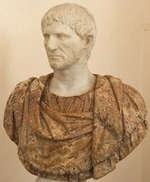
Antique Rome’s Early Stage
Here we provide several points of authors' predisposition
The main topic we will discuss is Auctions in Historical Context.
Why do we choose this approach? To avoid the common error of 'Modernisation of Historical Phenomena'.
The goal of the article is to dive our honourable readers into the Classic Historical Context, and review the Auctions as Social Activity Acts, from the historical disposition.
Step by step, you will follow each of the stages of the Classical Roman development, trace its evolution, which may be very helpful in grasping social relationship modifications, and as a result, understanding of the modern structure and design of Auctions as a trading tool will become more clear.
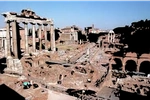
Cenate Definition
In the aim to trace Who are the Antique Romans and what was the Ancient Rome, as the Metropolia, let propose you a short trip to times of beginning...
Cenate:
Cenate in the following context: archaic, legendary, semi-mythical council (proto-Senate).
Senate:
Senate in the follow context: later institutionalized body, attested historically.
Romulus, and the Rome
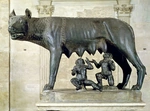
Here we outline the period of Romulus, as a preliminary step before the main overview. The reader should note that this section will appear twice in the article, but with slightly modified context.
Nevertheless such a person, mentioned in some sources as Romulus encountered as legendary, the legends still have a place in our life...
“Romulus and Remus, sons of Rhea Silvia and Mars, were exposed by the river Tiber, rescued by a she-wolf, and raised by a shepherd. When grown, they returned and decided to found a city. Romulus, after a dispute with Remus over the site and the auguries, killed his brother and named the city after himself, Rome.”
Livy – Ab Urbe Condita, Book I, Chapter 6 (c. 27–9 BCE)“Romulus and Remus, children of Rhea Silvia, were left exposed by the Tiber, suckled by a she-wolf, and reared by Faustulus the shepherd. In adulthood, they decided to establish a city. Romulus, having chosen the Palatine Hill, slew Remus after he leapt over the walls, and became sole ruler, giving the city the name Rome.”
Dionysius of Halicarnassus – Roman Antiquities, Book I, 7–8 (c. 30–7 BCE)“Romulus and Remus, sons of Mars, were left to die by the river, saved by a she-wolf, then fostered by Faustulus. When they grew, they resolved to found a city. Disputes arose over the hill to settle; Remus mocked Romulus’ walls and was slain. Romulus then became the first king of Rome.”
Plutarch – Life of Romulus, Chapter 2–3 (46–120 CE)
The sources we are encounting to untrusted, by one simple reason, all of them are written significantly later of the events, described there. And even if we step aside from the stylistics approach fashioned to that times, a city foundation timesame as a circumstances, described above, may be accepted with only exceptions, if such testimonies correlate with archaeologic data, and lucky smiling us, - they are!. When we scraped off the opulence and decorations of the texts, we obtain data that can be subjected to analysis and comparison of facts.
So, let's collect facts about the Rome city foundation
ancient literary witnesses (Livy, Dionysius, Plutarch, Ovid, etc.) wrote centuries after the events; archaeology gives direct physical dates. Below, I will provide few cites of ancient texts (with translation locations) and modern archaeological summaries (excavation reports alongside each fact).
Antique testimony (fact as they recorded it):
Livy gives the traditional foundation narrative and uses the conventional founding chronology (the Roman calendar tradition places Romulus’ foundation in 753 BCE).
The whole duration of the regal government from the foundation of the City…
(Livy, Ab Urbe Condita, Book I)Material evidence shows urbanizing activity on the Palatine and Forum area in the 8th century BCE, consistent with a proto-urban foundation in the mid-1st millennium BCE. Pottery, hut remains and ritual deposits date to the 9th–8th centuries BCE, supporting an emergence of a nucleated settlement around that time (archaeological syntheses and Palatine excavations).
Location: Palatine Hill (and adjacent lowlands (Forum)) as the nucleus
Antique testimony:
Archaeology:
Excavations on the Palatine reveal Iron Age huts, postholes and an early wall line (sometimes called a Palatine enclosure (“murus Romuli”) by some scholars) dated to the 8th century BCE. Early funerary sealed in the future Forum valley stop in the late 9th century BCE and the area converts to public (or ritual) use in the 8th century BCE. These data place initial settlement and ritual (urbanic) activity on the Palatine and adjacent valleys in the 8th century.
The “twins” (as also ”she-wolf”) foundation legend (Romulus & Remus)
Antique quotations: (classic legendary formulation)
Early fortification | Palatine wall (sometimes linked to “Romulus”)
Antique testimony:
Archaeology:
“Romulus marked out the boundaries of the city, and having built the walls, he fortified the Palatine Hill, placing watch posts along the perimeter, and organized the people for its defense.”
Livy — Ab Urbe Condita, Book I, Chapters 4–6 (c. 27–9 BCE)“Romulus, after founding the city, surrounded it with walls, and assigned citizens to the defense of each part, setting watch posts and fortifying the approaches to the Palatine. In this manner, the city was rendered safe and the citizens were disciplined in war and peace alike.”
Dionysius of Halicarnassus — Roman Antiquities, Book I, Sections 10–14 (c. 30–7 BCE)“Thus Romulus, by enclosing the city with a wall and assigning each man his proper place in the defense, laid the foundations of Rome and of the Senate.“
Livy, Book I, ch. 6“He built ramparts around the chosen site, fixed the boundaries, and assigned plots to each settler so that both defense and habitations were arranged systematically.”
Dionysius, I.11–12
Early domestic architecture: huts (Casa Romuli)
Archaeology:
Antique testimony:
“The site of Romulus’ hut was preserved, and its simplicity marked by tradition; later, the pontiffs kept it as a sacred place, a reminder of the city’s humble beginnings.”
“This hut, which Romulus built with his own hands on the Palatine, was retained by the Romans even after the erection of larger houses and public buildings, serving as a symbol of the city’s origin.”
Livy — Ab Urbe Condita, Book I, Chapter 6 (c. 27–9 BCE)“Romulus’ house on the Palatine was small and simple, made of unbaked bricks and thatch. In later times, the Romans preserved it carefully and the pontiffs maintained it, keeping alive the memory of the city’s founder.”
Dionysius of Halicarnassus — Roman Antiquities, Book I, Section 14 (c. 30–7 BCE)“Romulus built a hut of humble materials on the Palatine Hill, and even after the city expanded, the hut was preserved as a sacred relic. It was tended by the priests, who showed it to those who wished to see the founder’s dwelling.”
Plutarch — Life of Romulus, Chapter 9 (46–120 CE)
Early ritual sites in the Forum, or Comitium... (Vulcanal, Lapis Niger, Regia)
Archaeology:
“Romulus, having fixed the city’s boundaries, set apart a sacred spot on the slope of the Capitoline, the Vulcanal, for the worship of Vulcan, and decreed that the assembly should meet there in times of emergency.”
“The Comitium, a gathering place for the people, was established near the Forum, so that the citizens could assemble for elections and deliberations, and to witness the performance of sacred rites.”
“Romulus or Numa assigned a house for the pontifex maximus, called the Regia, from which the religious administration of the city was conducted.”
Livy — Ab Urbe Condita, Book I, Chapters 6–7 (c. 27–9 BCE)“Romulus consecrated a shrine to Vulcan on the open slope of the hill, calling it the Vulcanal, and decreed that public sacrifices be made there in times of war or pestilence.”
“Near the Forum, a space was set aside for the assembly of citizens, the Comitium, where the elders met and legal and religious matters were handled.”
“Near the Forum, a space was set aside for the assembly of citizens, the Comitium, where the elders met and legal and religious matters were handled.”
“The Regia, a house of the king, became the office of the pontifex maximus. Here the laws of sacrifice and sacred rites were kept, and the early kings conducted the religious affairs of the city.”
Dionysius of Halicarnassus — Roman Antiquities, Book I, Sections 12–14 (c. 30–7 BCE)“Romulus set apart the Vulcanal, a holy spot for the worship of Vulcan; he also founded the Comitium, where the people could assemble, and the Regia, where priests performed sacred rites and maintained the memory of the city’s religious duties.”
Plutarch — Life of Romulus, Chapter 9 (46–120 CE)
| Sanctuary | Function | Attribution | Source |
|---|---|---|---|
| Vulcanal | Altar/shrine to Vulcan; site for public sacrifices | Romulus | Livy I.6; Dionysius I.12; Plutarch ch. 9 |
| Comitium | Assembly place for citizens; deliberation & elections | Romulus / early kings | Livy I.7; Dionysius I.13; Plutarch ch. 9 |
| Regia | King’s house; office of Pontifex Maximus; religious administration | Romulus / Numa | Livy I.7; Dionysius I.14; Plutarch ch. 9 |
Political institution: the Senate (Romulus credited by tradition)
No inscriptional “smoking gun” names Romulus, but archaeology shows early nucleated settlement and social stratification in the 8th–7th centuries.
The material record (larger houses, special deposits, elite graves near the Palatine/Forum) supports the existence of an emergent elite that could have formed a council of elders — consistent with the Senate’s early historic role (textual) though the institutional details are literary reconstructions.
Antique testimony:
“Romulus… formed the Senate of one hundred men, who were called patres, from whom the patrician order derives its name.”
Livy, Ab Urbe Condita, Book I
Early Rome (say, the Regal and early Republican period, 8th–4th century BCE) and the Greek poleis (roughly 8th–4th century BCE) did have forms of communication, but it was not “instant” in the modern sense.
We should emphasize the fact of the communication had its place from several seasons.
Cultural impact to the Classical Rome evolutionary processes took place in particular areas (religion, art, and political ideas)
Unfortunately, we have no broad, long list of contact testimonies in archaeology related to the early Roman period. The undisputable influence of Ancient Greece on Roman political structure, design, and culture can only be derived from a few existing records, mostly dated to the Roman Republican period.
Cicero shared with us his stands of view on how Greece impacts Roman tradition...
Even if we take into account broadly used disclaimers from classical logic tutorials, which point us to the common error as: 'appeal to authority fallacy (or argumentum ad verecundiam)', It is impossible to disregard Cicero’s reflections, based on the lack of ancient excavation archaeological evidence and artefacts.
But the claim should be aligned with some considerations:
Cicero wrote centuries after early Rome’s founding, so his perspective is not firsthand.
He had his own biases—political, rhetorical, and cultural—which can affect reliability.
In our own defence of the declaration that the historical period we are reviewing has a lack of archaeological artefacts, we should put on the table a leaf with notation that the claim is the unauthoritative stance of our authorship...
Latin: “Omnes artes quae ad humanitatem pertinent habent quoddam commune vinculum et quasi cognatione quadam inter se continentur.”
English: All disciplines connected with the humanities are bound together by a common link, as though by a natural kinship.
Tusculan Disputations, II.5; Cicero openly says Rome’s culture is built on Greek foundations.Latin: “Philosophia inventrix legum, dux virtutis, expultrix vitiorum; sed omnium inventrix Graecia.”
English: “Philosophy is the discoverer of laws, the guide of virtue, the banisher of vice; and yet the inventor of all this was Greece.”
De Finibus, III.3; He admits philosophy—the core of Roman intellectual life—was born in Greece.Latin: “Non enim parva res neque tenuis, sed magna et ampla quaedam res et ad bene beateque vivendum aptissima a Graecis ad nos deducta est.”
English: “For it is no small or trivial matter, but a great and noble pursuit, most suited to a good and happy life, that has been brought to us from the Greeks.”
De Oratore, I.14; Rhetoric and philosophy, he says, came from Greece and are vital for Rome.Latin: “Testes Graecos—quamquam etiam sine hoc genere testium satis firmam causam habet Flaccus—sed tamen quid est quod hoc loco dici possit? Levitas Graecorum, fallacitas, mendacium.”
English: “Greek witnesses—although even without this kind of witness Flaccus’ case is strong enough—yet what can be said here? The fickleness of the Greeks, their deceit, their mendacity.”
Pro Flacco, 28.67; While admiring Greek culture, Cicero also mocks Greeks in legal contexts as untrustworthy.
Romul, the First King of Rome
Numa Pompilius, Second King of Rome

Tullus Hostilius, Third King of Rome
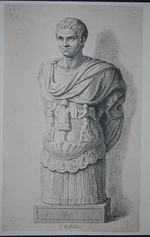
Ancus Marcius, the Fourth King of Rome
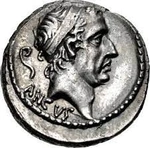
The Roman King Tarquinius Priscus

Tarquinius Superbus, the Last King of Rome