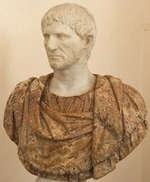
Tullus Hostilius (3rd king of Rome, r. ca. 673–642 BCE)
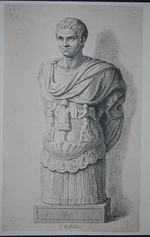
Main Political Characteristics
Militaristic turn:
Ancient writers (Livy, Dionysius of Halicarnassus) describe him as the opposite of Numa. Where Numa stressed religion and peace, Tullus promoted expansion by arms.
Aggressive foreign policy:
Wars against Alba Longa, Fidenae, Veii, and the Sabines. The legendary episode of the Horatii and Curiatii duel belongs here (a ritualized conflict resolution between Rome and Alba).
State consolidation through conquest:
After Alba Longa’s destruction, Tullus supposedly resettled its population in Rome, swelling Rome’s manpower and extending its patrician houses.}
Institutions of that Time
Kingship (regnum):
Still monarchical, with king as supreme military, judicial, and religious figure.
Senate:
Advisory council of patres (elders), as in Romulus’ time, retained prestige but king’s military role overshadowed their influence.
Assembly (comitia curiata):
Still largely ceremonial; citizens ratified decisions but did not direct policy.
Religion:
Unlike Numa, Tullus initially neglected cults. Livy claims this impiety led to plague and his downfall — then he tried to restore rites, but the gods (esp. Jupiter) punished him.
Polis Management & Social Order
Urban integration:
With Alba Longa’s population merged, Rome expanded socially and physically (settling the Caelian Hill).
Militarization of society:
Civic duties were increasingly tied to military obligation, reinforcing the warrior role of the citizen.
Rights & strata (continuity from Romulus):
Patricians (patres):
Retained dominance in politics and Senate.
Plebeians:
Increasingly numerous after Alba’s absorption, but rights remained limited; political weight still minimal.
Clients:
Expanded class, dependent on patrician patrons for protection and representation.
No democracy:
Authority still concentrated in monarchy + patrician elite. Assemblies functioned but without true legislative power.
Comparison vs. Romulus & Numa
Romulus: Founded institutions, organized Senate, defined patricians/clients. Warrior-king model.
Numa: Religious pacifier; instituted priesthoods, cult order, regulated rites.
Tullus: Swung back to Romulus’ militarism, expanded Rome through conquest, but without new constitutional reforms — his legacy is territorial/urban, not institutional.
Tullus Hostilius – Reforms & Main Changes
Military focus:
Organized wars against Alba Longa, Fidenae, Veii, Sabines.
Legendary duel (Horatii vs. Curiatii) as ritualized warfare institution.
Population integration:
After Alba Longa’s destruction, transferred much of its population (patricians + commoners) to Rome.
New patrician families entered the Senate.
Caelian Hill settled by newcomers.
Institutional:
No major new civil or religious institutions credited to him (unlike Numa).
Tried to revive neglected rituals later, but associated with impiety.
Urban development:
Expanded city space, incorporating new population zones.
Economy of the Period
Agriculture: Main basis; conquest brought new land and manpower.
Labor supply: Influx of Alba Longa population increased available labor and military strength.
Early integration economy: Merging populations meant new client–patron ties, strengthening patrician estates.
No evidence of trade reforms or auctions/markets: Unlike later kings (esp. Ancus Marcius, who built the port at Ostia). Under Tullus, focus remained martial, not commercial.
| Aspect | Romulus | Numa Pompilius | Tullus Hostilius |
|---|---|---|---|
| Main Characteristic | Warrior-founder | Religious lawgiver | Warrior-expander |
| Political Institutions | Senate of patres; curiae assemblies; kingship central | ,Priesthoods (Pontifex Maximus, Vestals, Flamines); cult regulation | No new institutions; reinforced Senate with Alba’s patricians |
| Religion | Basic cults, Jupiter Feretrius, augury | Systematic cults, temples, calendars, rituals | Neglected rites → later tried restoring, but seen as impious |
| Social Structure | Patricians, plebeians, clients established | Reinforced class duties via religious legitimation | Expanded patriciate by absorption of Alban houses |
| Economy | Subsistence agriculture, cattle, no formal markets | Same agricultural base, stable/ritual economy | Expansion by conquest, land and manpower increase |
| Military | War with neighbors; defense of settlements | Peaceful reign, avoided wars | Aggressive campaigns; destruction of Alba Longa |
| Urban Development | Initial settlement on Palatine, Forum valley drainage | Religious monuments, shrines | Settlement of Caelian Hill with Alba Longa migrants |
| Democracy? | No — monarchy + Senate dominance | No — monarchy but sacral authority moderated power | No — monarchy + Senate, militaristic elite strengthened |
Introduction to Early Rome: The Seven Kings
Romul, the First King of Rome
Numa Pompilius, Second King of Rome

Ancus Marcius, the Fourth King of Rome
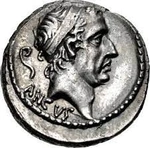
The Roman King Tarquinius Priscus
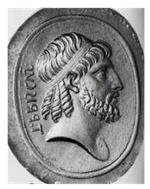
Tarquinius Superbus, the Last King of Rome