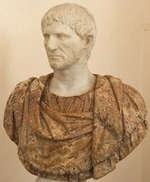
Numa Pompilius Period (c. 715–673 BCE) – Second King of Rome

Main Political Characteristics
Pacifist & Religious Focus:
Numa emphasized religion, law, and internal order rather than military expansion.
Legislation & Custom:
Introduced laws regulating religious observances, sacred calendars, and civic rituals, aiming to harmonize citizens’ behavior with divine law.
Advisory Nature:
Relied heavily on counsel of priests and elders, reducing the direct use of force compared to Romulus’ militarized reign.
Centralized Authority:
Despite focus on religion, retained full imperium as king — ultimate judicial, legislative, and military authority.
Institutions of the Time
Senate:
Continued from Romulus’ time; advised Numa on policy, religious law, and civic matters.
Likely increased prestige of priests among senators; Numa emphasized sacred authority over coercive power.
Pontifical College (Collegium Pontificum):
Established formal priesthood structure; Pontifex Maximus at head.
Oversaw religious law, sacrifices, calendar, and rituals.
Vestal Virgins:
Institution attributed to Numa; ensured continuity of sacred rites and protection of Rome’s hearth.
Other Religious Offices:
- Augurs
- Flamines
- Salii
Polis Management
Urban Organization:
Focus on ritual spaces and sacred sites, e.g., temples, altars, shrines.
Oversaw maintenance of boundaries (religious and civic) and public sanctity rather than military defense.
Conflict Resolution:
Emphasized law, ritual, and mediation rather than coercion.
Social disputes often addressed through religious and moral frameworks.
Civic Calendar & Public Festivals:
Introduced regular religious observances, shaping social cohesion.
Managed sacred dates, ceremonies, and cults to integrate population and reinforce Numa’s social reforms.
Democracy & Civic Participation
No true democracy:
Political power remained monarchic, with king’s imperium supreme.
Civic bodies like the Senate and assemblies existed but functioned largely in advisory capacity, not legislative.
Indirect citizen engagement:
Through participation in rituals and festivals, citizens were socially involved.
Religious offices often connected to social strata, giving a structured but hierarchical form of participation.
Rights & Role of Numa
Imperium:
Absolute judicial, legislative, and ceremonial authority.
Legislative Role:
Issued leges regiae regulating civic, moral, and religious life.
Religious Commander:
Controlled rites, calendar, and sacred law; acted as mediator between gods and people.
Moral Arbiter:
Influenced social norms, obligations, and hierarchy through religious-moral legislation.
Social Structure & Strata Rights
Patricians:
Held political and religious leadership; many served as senators or priests.
Exercised power over ceremonial and legal matters.
Plebeians:
Majority of population; engaged in agriculture, crafts, and local services.
Participated in rituals and festivals; limited formal political rights.
Slaves / War Captives:
Minor fraction; provided labor in households and temples.
Client-Patron Networks:
Strengthened under Numa’s reign through religious and moral obligations, forming early social cohesion mechanisms.
Summary of Key Reforms Introduced by Numa Pompilius
Religious Institutionalization:
Established Pontifex Maximus, Vestal Virgins, augurs, and flamines.
Rituals and Festivals:
public religious observances.
Governance:
Minimized military campaigns; promoted social stability.
Legal and Moral Codes:
Expanded leges regiae to include civic and moral law, emphasizing harmony.
Strengthened Social Cohesion:
Patron-client networks and ritual obligations integrated plebeians into civic life.
Urban & Civic Reforms:
Focused on sacred and communal spaces rather than fortifications.
Population of Numa Pompilius' period
Settlement on the Seven Hills continued to expand slowly during the 8th–7th century BCE.
Excavations on the Palatine, Capitoline, and Forum areas show growth of huts into denser villages, eventually merging.
Auctions in Numa’s period
We cannot yet operate with actual sources to assert anything concrete without falling into speculation. As economic structures had not evolved into market tools involving auctions, we may only proceed further to the next stage.
| Aspect | Romulus (c. 753–716 BCE) | Numa Pompilius (c. 715–673 BCE) | Key Changes / Reforms Introduced by Numa |
|---|---|---|---|
| Political System | Monarchy with centralized power; king held imperium over military, law, and religion | Monarchy retained; king still held imperium, but focus shifted to religious and legal authority | Reduced militaristic focus; emphasized moral and religious governance |
| Senate | Advisory council of patres (100–300 elders); mostly patricians; no legislative power | Continued Senate, with stronger religious and moral advisory role | Senate became more institutionalized in religious matters; supported king’s peaceful governance |
| Civic Assemblies | Curiate Assembly: family-based; ratified king’s decrees | Assemblies continued but had minor role; citizen participation largely through ritual observances | Civic involvement shifted from political ratification to ceremonial/religious participation |
| Military | King-led army of male citizens; expansionist raids common | Numa minimized military campaigns, promoting peace | Military duty less emphasized; social stability prioritized |
| Law / Legislation | Leges regiae: decrees issued by king, focused on civil and military control | Expanded religious laws, moral codes, and civic regulations | Codified rituals, festivals, and religious obligations; formalized law of conduct |
| Religion & Priesthoods | Rudimentary; early religious rites integrated with king’s authority | Established formal religious offices: Pontifex Maximus, Vestal Virgins, augurs, flamines | Institutionalized religion, codified calendar, and sacred duties; structured priesthoods |
| Ritual Sites / Public Spaces | Early fortifications; Palatine Hill; Vulcanal, Regia, Comitium established | Expanded sacred spaces, temples, altars; regularized public festivals and rituals | Reinforced religious integration into civic life; ritual observances became central to social cohesion |
| Social Structure / Strata Rights | Patricians held power; plebeians mostly laborers; minor slaves | Patricians maintained dominance; plebeians included in ritual and moral framework | Strengthened client-patron networks; reinforced hierarchical but cooperative civic order |
| Economy / Goods Flow | Barter-based, subsistence economy; tribute in-kind | No major economic reforms; Numa did not focus on expansion or markets | Maintained subsistence and tribute systems; peaceful stability favored orderly resource distribution |
| Urban / Polis Management | City walls, Palatine settlement, rudimentary organization | Focus on sacred organization, civic cohesion, and religious oversight | Shifted from militarized urban defense to ritualized civic planning and social order |
| Citizen Rights & Duties | Obliged to military service, contribute labor or goods to king | Civic duties largely religious and moral; participation in festivals and rituals | Civic obligations became ethical/religious rather than military, integrating society through moral norms |
Introduction to Early Rome: The Seven Kings
Romul, the First King of Rome
Tullus Hostilius, Third King of Rome
Ancus Marcius, the Fourth King of Rome
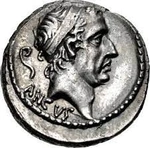
The Roman King Tarquinius Priscus
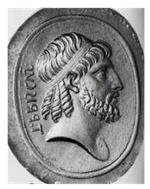
Tarquinius Superbus, the Last King of Rome