The Colonisation Period in Archaic Greece
There had been an earlier period of Greek colonisation during the Dark Ages (1200–900 BC) after the fall of the Mycenaean civilisation in the twelfth century.
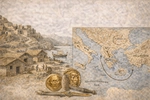
Greek Colonisation (c. 750–550 BCE): Expansion, Trade, Land Pressure, and the Rise of the Polis
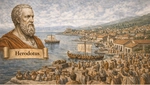
An analytical introduction to the Great Greek Colonisation (8th–6th centuries BCE), examining its geographic scope across the Mediterranean and Black Sea, the socio-economic drivers of expansion, the distinction between apoikia and emporion, and its connection to the rise of the polis, long-distance trade, and post–Dark Age transformation.
Land-Hunger and Over-Population in Greek Colonisation: Literary, Archaeological, and Epigraphic Evidence (8th–7th Centuries BCE)
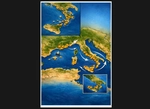
A historiographical examination of archaic Greek colonisation focusing on land-shortage and demographic growth as primary causes, supported by Thucydides, Aristotle, Hesiod, and Herodotus, archaeological population data from Attica, and the Cyrene foundation decree (ML 5), illustrating the socio-economic pressures behind overseas expansion.
Trade Networks and Strategic Foundations in Greek Colonisation: Emporia, Metals, and Mediterranean Connectivity
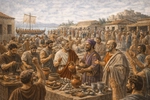
An analytical study of trade as a driving force in Greek colonisation, examining emporia such as Al Mina and Pithecusae, metal exchange with the Etruscans, Black Sea grain routes, Corinthian and Milesian expansion, and the strategic-commercial logic behind foundations including Cumae, Zancle, Rhegium, Massalia, and Emporion.