Seven Kings of Ancient Rome
An in-depth educational overview of Rome under its legendary seven kings, from Romulus to Tarquinius Superbus. The article traces the evolution of political institutions, urban development, social structures, military organization, and economic practices, highlighting how early Rome grew from a small settlement into a proto-state. It examines monarchic authority, the Senate and assemblies, the census, urban infrastructure (bridges, ports, Cloaca Maxima, walls, temples), population integration, and trade. Economic activity is explored, from subsistence agriculture and tribute collection to river trade and state-controlled resources, noting that formal auctions and structured market institutions did not yet exist in Rome, unlike contemporary Greek poleis. The narrative shows trends towards complex social interactions, proto-commercial activity, and preparation for the Republic.
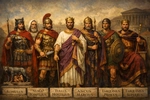
Introduction to Early Rome: The Seven Kings
The introduction to the early stage of Rome, describing the city from a predispositional point of view. For a deeper understanding of the kings’ reigns in Rome, we recommend reading the article.
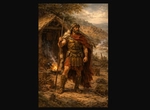
Romulus, the First King of Rome
This publication uncovers the legendary first king of Rome, Romulus, in detail. It includes only facts, real sources, and the socio-cultural stage of Rome during the mentioned period.
Numa Pompilius, Second King of Rome
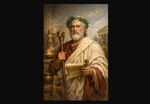
The second king of Rome, Numa Pompilius, is presented through his key reforms, reign policy, and the development of Roman society.
Tullus Hostilius, Third King of Rome
Tullus Hostilius was one of the kings of ancient Rome; in this publication, we describe him as the ruler of Rome, the reforms he provided, and the socio-cultural background of the Roman population during that period.
Ancus Marcius, the Fourth King of Rome
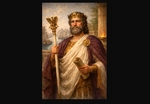
Ancus Marcius was one of Rome’s kings. You may find many interesting facts regarding the reforms he provided and what Roman society was like during his reign.
The Roman King Tarquinius Priscus
The fifth king of Rome, Tarquinius Priscus — have you heard about the rules and innovations this king implemented in Rome, and his impact on later Roman development? There were quite a few...
Servius Tullius – Sixth King of Rome (c. 575–535 BCE)
Servius Tullius’ reign is traditionally associated with profound constitutional and social reforms that reshaped early Roman society. He is credited with instituting the census, reorganizing citizens into wealth-based classes and centuries, expanding the city’s walls (the so-called Servian Wall), and redefining Rome’s religious and political landscape. His policies strengthened civic identity, broadened political participation among lower social ranks, and laid the structural foundations for later Republican institutions.
Tarquinius Superbus, the Last King of Rome
Tarquinius Superbus, the last king of Rome. This publication explores Roman society and the main political and social structures of his period, as well as the reforms attempted during his reign.
The Expulsion of Tarquinius Superbus and the Interregnum of Rome

This article describes the final days of the Roman monarchy and the interregnum period that followed the fall of King Tarquinius Superbus.