Supernatural & The Fantastic: Genre Description and How to Enter the Category Competition for Writers
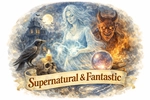
A literary genre devoted to the intrusion of the unaccountable into the ordinary world. Such works place human beings in contact with phenomena that resist rational explanation: apparitions, hauntings, curses, prophetic signs, uncanny doubles, living myths, distorted time, sacred or forbidden places, and events that stand uncertainly between spiritual truth, folklore, hallucination, and metaphysical rupture. The genre derives its force not merely from marvel, but from tension: the reader is made to inhabit a threshold where reality remains recognisable, yet is troubled by something that should not be possible.
In literary form, Supernatural & The Fantastic is not defined simply by the presence of magic or horror. It is defined by the atmosphere of estrangement and the serious narrative treatment of the inexplicable. The extraordinary must carry symbolic, emotional, psychological, or philosophical weight. The supernatural element is not decorative; it alters perception, moral order, destiny, fear, memory, belief, or the structure of reality itself.
For the purposes of competition classification, a work belongs to this genre when its central artistic construction depends upon one or more inexplicable or otherworldly phenomena that shape the meaning, conflict, tone, or development of the text. The genre may draw from ghost lore, regional legends, mythic survivals, occult patterns, dreamlike unreality, sacred visitations, curses, possessions, prophetic disturbances, or surreal events that fracture the stability of the known world. The work may be eerie, solemn, lyrical, symbolic, tragic, philosophical, or wondrous, but it must preserve a palpable relationship between the visible world and an intrusive mystery beyond it.
Literary rules of the form and core genre requirements
Supernatural & The Fantastic should ordinarily possess the following qualities:
- Presence of the inexplicable as a structural element: The supernatural or fantastic component must be essential to the work, not incidental. If removed, the narrative, theme, or artistic force of the piece would be fundamentally altered.
- A recognisable reality placed under disturbance: The genre usually gains strength when it begins from a world that readers can recognise as coherent, social, historical, domestic, or psychological, and then introduces an event or presence that unsettles that coherence.
- Sustained ambiguity, revelation, or metaphysical tension: The work may confirm the supernatural openly, or it may preserve uncertainty. In either case, it must create serious tension between what is known and what exceeds knowledge.
- Atmosphere as an artistic necessity: Mood is central. Dread, wonder, estrangement, sacred unease, melancholic haunting, or dreamlike instability should arise through language, imagery, rhythm, and scene construction rather than through mere statement.
- Internal coherence of the impossible: Even when events are irrational, the work must remain artistically controlled. The supernatural logic, symbolic recurrence, folklore basis, or surreal structure should feel deliberate and meaningful within the world of the text.
- Human consequence: The inexplicable must affect consciousness, relationships, decisions, morality, memory, identity, or fate. The genre is not fulfilled by spectacle alone.
- Engagement with myth, folklore, belief, or symbolic depth: Many strong works in this category draw power from inherited cultural material, ritual patterns, archetypal fears, local legend, spiritual imagination, or psychologically resonant symbols.
- Language suited to uncanny experience: Style should assist the genre. Whether spare or ornate, realistic or lyrical, the prose or verse must be capable of carrying tension, suggestion, atmosphere, and tonal control.
- A balance between mystery and intelligibility: The work should not collapse into randomness. Even when it withholds explanation, it must offer artistic orientation: emotional logic, thematic pattern, symbolic meaning, or narrative progression.
- Distinct separation from adjacent genres: The category is not identical with fantasy, horror, or magical adventure. A work belongs here when the inexplicable is treated chiefly as uncanny, metaphysical, surreal, folkloric, or reality-disturbing, rather than as a stable secondary-world system or straightforward action framework.
Definition the category must possess
To qualify properly as Supernatural & The Fantastic, the work must present a literary reality in which the boundaries of the natural, rational, or empirical order are disrupted by phenomena that cannot be securely explained and that serve a meaningful artistic purpose. The genre requires not only unusual events, but a deliberate poetics of uncertainty, haunting, estrangement, revelation, or metaphysical intrusion. Its essence lies in the confrontation between the ordinary world and what exceeds it.
Common features for writers that the jury usually takes into account under the evaluation procedure
For the genre Supernatural & The Fantastic, the committee commonly evaluates the work through three principal lines of judgement: genre correctness, artistic value, and formal or compositional integrity. The aim is not merely to determine whether the text contains ghosts, visions, or strange events, but whether it truly fulfils the literary demands of the genre and transforms the inexplicable into meaningful art.
Genre correctness
The jury usually considers whether the work genuinely belongs to Supernatural & The Fantastic rather than only borrowing isolated motifs from neighbouring genres. Common points of attention include:
- Centrality of the inexplicable: The supernatural, uncanny, or surreal element must be central to the work’s identity, not a minor embellishment.
- Disturbance of reality: The text should create a meaningful rupture in the ordinary order of life, perception, memory, or belief.
- Atmosphere of uncertainty, haunting, or estrangement: The work is often judged by how convincingly it sustains an uncanny tone rather than merely naming unusual events.
- Serious artistic use of supernatural material: Ghosts, legends, apparitions, curses, doubles, or surreal intrusions should serve narrative, symbolic, emotional, or philosophical purpose.
- Proper distance from adjacent genres: The jury may ask whether the piece is in fact horror, fantasy, allegory, psychological drama, or myth retelling rather than a true supernatural or fantastic composition. Hybridisation is acceptable, but the dominant mode must remain clear.
- Consistency of the impossible: Even ambiguity requires discipline. The strange element should feel intentionally shaped, not arbitrary or accidentally confusing.
Artistic value
The committee usually places strong emphasis on whether the work rises above concept and achieves literary force. Frequent criteria include:
- Atmospheric mastery: The writer’s ability to evoke unease, wonder, silence, dread, sacred tension, or surreal instability through literary means.
- Depth of suggestion: Strong works often imply more than they explain. The jury tends to value resonance, subtext, and symbolic layering.
- Psychological credibility: However strange the events may be, the human response to them should remain emotionally convincing and artistically persuasive.
- Symbolic and thematic richness: The supernatural event may illuminate grief, guilt, memory, faith, historical trauma, isolation, destiny, inherited fear, or the instability of identity.
- Originality of treatment: The committee will usually distinguish between clichés and fresh imaginative execution. Familiar material may still succeed if rendered with new perception, language, or structure.
- Language and stylistic control: Diction, rhythm, imagery, and tonal consistency are often decisive. The prose or verse should be capable of carrying delicate tensions without collapse into excess or banality.
- Lasting impression: Strong entries often leave a durable aftereffect: intellectual unease, emotional echo, metaphysical disturbance, or memorable imagery.
Shape requirements and formal integrity
The jury commonly examines whether the work is properly formed as a literary composition and whether its internal construction supports the genre. Typical features considered:
- Structural coherence: The narrative must possess intelligible artistic organisation, even where ambiguity is preserved.
- Controlled development of tension: The strange should emerge, deepen, or reverberate with measure. The work should not reveal too much too quickly, nor remain shapelessly obscure.
- Proportion between revelation and concealment: One of the chief formal tests of the genre is whether the text knows what to disclose and what to leave uncertain.
- Unity of tone: Sudden tonal collapse into parody, melodrama, sentimentality, or accidental absurdity may weaken the piece unless such movement is clearly deliberate and artistically justified.
- Functional imagery and motifs: Recurrent symbols, objects, places, sounds, dreams, or ritual elements should contribute to the composition rather than appear as decorative fragments.
- Economy and precision: The jury often values concentrated suggestiveness over excessive explanation. Diffuseness may diminish power.
- Ending adequacy: Conclusions are especially important in this genre. The ending need not solve the mystery, but it should complete the artistic design. It must feel earned, resonant, and proportionate to the work’s governing tension.
Common strengths the jury usually values
A work in this category is often regarded favourably when it demonstrates:
- a persuasive uncanny atmosphere;
- subtle integration of folklore, myth, or metaphysical suggestion;
- disciplined ambiguity rather than confusion;
- emotional seriousness and symbolic depth;
- refined language and tonal control;
- an original and memorable handling of supernatural material;
- a coherent form in which every strange element contributes to meaning.
Common weaknesses the jury usually notices
A work may be judged weaker when it shows:
- supernatural elements used only as ornament;
- reliance on clichés such as predictable ghosts, unexplained shadows, or borrowed occult imagery without deeper purpose;
- confusion mistaken for mystery;
- over-explanation that destroys the uncanny effect;
- shapeless plotting or weak compositional control;
- exaggerated melodrama instead of genuine tension;
- lack of thematic depth or human consequence;
- tonal inconsistency that breaks the atmosphere.
General committee strategy of evaluation
From a literary point of view, the committee usually proceeds by asking:
- Does the work truly inhabit the genre, or merely imitate its surface signs?
- Does the supernatural or fantastic element transform the literary world in a meaningful way?
- Is the atmosphere sustained with artistic discipline?
- Does the text possess symbolic, psychological, or philosophical depth?
- Is the composition structurally controlled and formally complete?
- Does the ending preserve or fulfil the work’s central tension?
- Does the piece remain in the reader’s mind as a serious literary achievement?
Concise evaluative definition

In jury practice, Supernatural & The Fantastic is usually rewarded most highly when the work joins genre fidelity, artistic atmosphere, and formal precision. The strongest entries are those in which the inexplicable is neither random nor ornamental, but becomes the governing medium through which reality is disturbed, meaning is deepened, and literature attains memorable force.
The Competition Presubmission Period Has Already Been Scheduled
Just below, you may see a countdown showing how many days remain before the competition presubmission period begins. On the indicated date, you will be able to visit our competitions and either reserve participation in advance or purchase a gift for someone close to you.